I kept a diary of our two months vacation to the United States, and starting from the day of our departure on May the fifteenth 1959, I will now use it to fill in the delightful sixty-one days we enjoyed during this time.
View Cross Cross Country Trip in 1959 in a larger map
May 15, 1959
We left Atkinson Airport at 5pm. The weather was somewhat cloudy, and we arrived at Piarco Airport at seven o’clock p.m. Only fifteen minutes were spent here and, as we took off, the island of Trinidad was a riot of colour and very impressive from the air. We reached Dr. A. Plessman Airport in Curacao at 9.p.m. and overnighted at K.L.M’s guesthouse. It was very neat and tidy, with superb ventilation, and private bath and toilet. We phoned William McMurdoch but did not go into Willemstaad. The trip so far was very pleasant, a noticeable feature being the smooth and steady course of the Flying Dutchman (K.L.M.) and the pleasant temperature of the tourist cabin which was kept at about seventy-five degrees Fahrenheit.
May 16
After a good night’s sleep in Curacao, we continued our journey the next morning en route to New York.

The upper flat at the airport in Curacao was air-conditioned and very pleasant. We were not airborne until 11.15, and at 1.00 p.m. were served lunch (fillet of veal and fillet steak). The weather was fine until 4.30 p.m. when we ran into a lot of mist arid were told to fasten our seat belts. Tea was served at 5.45 p.m. and the sun was shining brightly now. Half an hour later we were spoken to by the pilot of the plane who explained that we were going to be in New York at 7.00 p.m. on account of favourable winds. We did actually arrive on time, and had our first glimpse of the U.S.A. We flew over the land for quite a while and finally landed at Idlewild airport. It was blowing quite a wind, and I was well advised to put on the sweater I had brought. For us, the temperature was cold, and it was registering 60 degrees F. We passed through what seemed like miles of corridors in this huge and impressive airport, until we finally arrived at the immigration and customs departments.
It was arranged that we would spend a week or two with our friends the Stobys in the Bronx before going over to Gordon in California, and as we left the customs where our luggage was examined, we saw Yulisse Stoby and Sylvia her sister, waiting for us. We were whisked to their home by car through fabulous New York, and for us, first-timers, it was a marvellous sight.
Our reception at the home of the Stoby’s was very hearty; their home is located at 724 Rosedale Avenue and the neighbourhood was a good one. For the first time we saw and enjoyed central heating, gas ranges, television and all those American gadgets we had only seen in pictures.
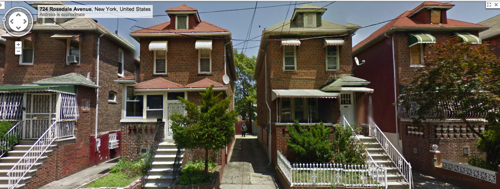
Also for the first time in our lives we lived in a house with practically all the doors and windows closed. Coming from the tropics where we lived, it was all so new to us, but with such reduced temperatures here, this was quite necessary. The floors were all carpeted wall to wall, and the beds carried no end of sheets and thick woollen blankets. Later that evening we met Gladys McMurdoch and went to see her apartment.
Awoke at 9.a.m. and had breakfast, dressed and we were taken by our host and hostess to a show at Radio City Music Hall. This is a magnificent building, but the real beauty lies in the interior arrangement.

The moment you enter you are spellbound by the stupendous splendour of the setting. It really beggars description. There are thick velvet carpets covering every inch of the floor and grand stairways. There are balconies and alcoves that make your eyes pop, and the vastness of the whole place is unbelievable. We saw the grand organ with its deep and majestic tones appear and then disappear.
The 100 piece orchestra rose from below the level of the stalls, then it would float upwards to stage level, then swing away to backstage, but still in ‘view, then as if transported by some magic carpet, elevated to a position over the stage, according to what was taking place onstage. We witnessed a complete skating rink with real solid ice come out as if from under the stage, along with a beautiful girl skater fresh from St. Moritz and partner doing breath-taking exhibitions. The climax of the show was a really delightful movie “Count Your Blessings”. This was quite a big day for us.
May 18

We fixed our breakfast and sallied forth on our own by bus and subway to see the shopping centre in downtown New York. Went through five floors of Macy’s and the basement, had a snack at an automat, (Horn & Hardat). Looked around a bit - we must have walked miles today through Macy’s. Quite tired, we returned home without mishap. Finding one’s way about via the subway is quite an experience. On our return home at about 5 p.m., Emma prepared pork chops for dinner.
May 19th
Awoke at 9.a.m. and made our breakfast. As usual everyone else has gone off to work. We vacuumed the three floors of the house, and tidied up the crushed suits etc. in our suitcases. Went over to the A & P stores nearby and made a few purchases for lunch. Emma fixed a really good chicken curry for the whole family’s dinner. This saves them from the bother of cooking when they come home all tired out after a day’s work, and perhaps an hour’s travelling from work. After dinner, Emma’s niece Elaine and her husband came for us to spend a couple of days with then in their Brooklyn home. Joy and her husband also came to see us today at Rosedale Ave.
May 20th
We spent two days in Brooklyn. Elaine & Wolley live in a bottom flat with two kids, and Bobby and his wife Caroline, (Bobby is Elaine’s brother) occupy the top. They also have two children. We met the Applewaithes, Frank and his wife Doris, and also Lilly, his aunt, whom I had not seen for thirty years.
Life in Brooklyn is quite another experience.
May 21st
Woke up early about 8am, and saw the garbage van at work in the street; What modernity!! It was the first time we saw such a machine, comprising a conveyor belt, a suction action and a crusher all in one.
The garbage was fed through the lower back end of the machine, then quickly drawn in and crushed. I was told that once an attendant’s fingers got caught and before the operator in front of this huge van could be alerted, he was drawn in and crushed to bits. How tragic!

Today Elaine accompanied us via subway to the Port Authority Bus Terminal where we made final arrangements for crossing over to California by Trailways and Greyhound buses. The bus depot was a magnificent place, underground and full of colour.
May 22nd
We go sightseeing today, and take young Reggie Stoby with us. We do the Empire State Building, ride the Staten Island Ferry, and see the coast to coast trains and Greyhound buses depart from their various terminals. What a glorious sight it is from the observation terrace on the 86th floor of the Empire State Building. New York just spreads itself in a fantastic panorama of sky-scrapers and magnificent buildings before and beneath us, with Central Park occupying a prominent position. We arrived home by subway in the rush hour, and this was another experience.


May 23rd
Today, Sylvia, Reggie and I drive into Idlewild Airport to recover the cake we had left behind in Curacao. After a little trouble we do collect it. ldlewild is an interesting place, - the doors open on approaching them and close behind you. Then one sees nobody around, but there is an “information booth” with a notice telling you to lift the receiver and listen. A voice says to you, “Yes sir, what can we do for you?” You speak into this telephone giving all your troubles and requests, and the voice then directs you to go two blocks away and see the clerk there. On the whole, this was uncanny. We go on to the observation terrace, and it is fully a quarter of a mile long. Being exposed, it was cold and windy. I was simply amazed at the vast expanse of buildings, with cars parked as far as the eye can see, and yet, withal, a sense of quiet orderliness. But then, this was the world’s largest airport.
May 24th
Cold and crisp this morning. I take a turn at driving the first American car, on the right side of the road. This “Dodge” has power steering, power brakes, automatic shift and is a convertible. Very easy to drive, actually. Later in the evening we visit Horace and Hazel Taitt, and have dinner with them. We afterwards are taken by them to the New York City Ballet to see a show. It lasted three hours and was delightful. Maureen would have enjoyed this. We reached home at midnight.
May 25th
Getting straightened out to cross over to California in a couple of days. Did a little shopping for the occasion at Macy’s in Parkchester, which is close to home.
May 26th
We go down town to collect a new suitcase for the one damaged on the K.L.M. flight. This is what I call real service. We buy some film and prepare to get back home to pack in order to proceed on the final leg of our journey 3,500 miles across the width of the U.S.A. by Greyhound. Lacking any experience whatsoever, we look forward to it with mixed feelings.
May 27th

Up at six a.m. and join a “Scenicruiser” to begin one of the greatest adventures of our lives. It is no overstatement to say that this bus is twice as comfortable as the “Flying Dutchman”. The seats are aeroplane type with adjustable foot rests, and the vehicle is comfortably air-conditioned. The viewing windows are of the wrap-around variety, the tops of which are so treated as to prevent any glare. When I say that I write this account as we travel on the motorways at the rate of 65 miles an hour, you will readily see how smooth and comfortable the riding is.
There is a complete lavatory on board, running water, liquid soap, paper towels, electric razor outlets etc. As we swing onto the Jersey turnpike - a six lane super speedway, all the beauty of the American country-side suddenly and rapidly begins to unfold before our eyes. After about two hours of the most delightful driving in our lives, we reach Philadelphia, and stop for fifteen minutes. We enter into an underground “comfort station”, arid then circle out.
Our next stop will be Harrisburg, where we will spend thirty minutes.
May 28th
Continuing on our way, the terrain is quite mountainous, and on several occasions we go right through the mountains via tunnels some of which were over a mile long. As we rode through those tunnels I noted down some of their names, e.g. ‘‘Tuscarora Hill”, “Sidling” and “Alleghany”. We then passed through Pittsburgh, the great iron city. and rode past Ohio by night. Somewhere alone the ride we had an experience with a car on fire, and our bus driver went to the rescue using his fire-extinguisher , quenching the fire.
We then crossed through Missouri, and what a great farming centre this is. There were plenty of camping facilities here, with abundant parklands, and some of the must delightful homes we had ever seen.
We changed busses at St. Louis, and by dawn we are heading for Indianapolis. This is a great big city, and we notice lots of mobile homes. Towards evening we pass through an Indian reservation in Indiana.
May 29th
Got into Tulsa, Oklahoma at about midnight, and shaved with my electric razor. We push on to Oklahoma City, and later on approach the dizzy heights of Amarillo. We can see from here’ some of the pipelines and oil installations of Texas. Passing through Albuquerque, we had the opportunity to see how modern highways are built. Albuquerque is a grand city, and in the dazzling shafts of the afternoon sun it was a truly magnificent sight.
May 30th
At the crack of dawn we are crossing the mountains into Arizona . How better to start the day than to he surrounded by the awe-inspiring beauty of nature. The mountain-pass through which our bus winds its way is estimated at about six to seven thousand feet and the sight is very impressive with the lush valleys below. In moments like this, one feels in very close communion with nature and the Great Architect of the Universe. On levelling out, and as far as the eye could see, there is one straight ribbon of road as we cross the Arizona desert for miles and miles. It took nearly two hours to cross it.
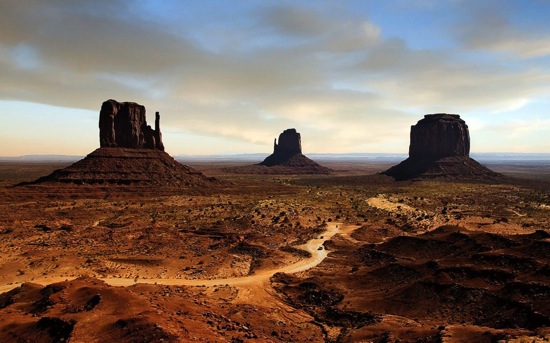
We enter California at 7.25 a.m. today, Saturday. 30th May and were inspected by state police. Then we drive for another four to five hundred miles through the California desert and at last observe from the heights of the Sierra Mountains what appears to be a great green valley stretching below us. After stopping at several points in California we finally reach San Bernardino at little past midday. On disembarking, we find that our two heavy pieces of luggage had not been put on the same bus, but we were told that they would follow on the next one. We telephoned Gordon, who lived about four miles away in Loma Linda, and he arrived within twenty minutes to take us to his home at 11222 Anderson Street, Loma Linda.
There we met Arna and Lucia for the first time.
To us, Gordon, who we had not seen for over five years, look a bit thin, but healthy. I suppose the tension fo his studying accounted for this. Arna proved to be a most charming girl, and Lucia, if you will pardon the conceit, a most delightful baby, just three months old.
A quick shower and change of clothes, (all borrowed from Gordon and Arna) and we a re welcomed to our first all-vegetarian meal. We try later in the day for our delayed luggage, but it has not yet arrived.
Today is really an American holiday – Memorial Day, and we are asked to collect the two suitcases on Monday. Today is also the Sabbath of the Adventists, and lacking our clothes, we were unable to attend evensong at the Chapel so Gordon holds a little home service for us.
May 31st
We recover our luggage today from the San Bernardino terminal, and begin to unpack, nothing is broken. Gordon goes over to the library to study for his finals (B.A.) on Tuesday next.
June 1st
Gordon takes me over to La Sierra College. I am very impressed with the atmosphere of this big American institution of learning. We spend some time in the air-conditioned library and I am introduced to the Dean and a few of his friends. The college is 17 and a half miles from home. On return to Loma Linda we all take a stroll through the campus grounds there. It is a delightful setting. We visit “Burdon Hall Chapel” where Arna and Gordon were married.
June 2nd
Final exams today, and Gordon leaves early for Le Sierra to spend the whole day doing three subjects. We met Milton Corwin, a polio case, who gets around in a motorised wheel-chair.
June 3rd
We spend today getting acquainted with Loma Linda, the name translated from the Spanish means “Beautiful Hill’’. We go on a tour of the hospital which is quite a modern place.
June 4th
Climbed up ‘‘Snob Hill’’, which provides an excellent view of the town. Later I pay a visit to Staters supermarket in Redlands four miles from home.
June 5th
Today is Consecration day at La Sierra College, being the beginning of the three days of Graduation exercises. At 8 p.m. the 96 graduates are consecrated prior to the Baccalaureate service to be followed by the Commencement (of their lives as persons with college degrees) on Sunday 7th. The consecration service lasted over an hour. Gordon was first in line. The sermon “The Road to Selfdiscovery” was ably delivered by Professor Bietz, who had the unquestioned ability to hold his audience. He is not only good-looking, but delivers his sermon in the form of an absorbing story to which you want to listen. The La Sierra Choral Ensemble did an anthem in harmonised singing. It was so good to listen to.
June 6th
It is the Baccalaureate service today, and the sermon was delivered by William A. Fagal, another fine preacher. His choice of talk was “The Highest Use of Your Education”. It revealed some intricate bits of life of the apostle Paul. The Church was packed to capacity. Here we met the Benders, and the Licux’s, (French) good friends of Gordon and Arna.
Later in the day we lunched as one large family in Redlands Park. This is a glorious place, well shaded and properly equipped with tables, benches, water and gas for cooking, lavatory arrangements etc. and playgrounds for both children and grown-ups! Most of the Robinson family was present, and we certainly enjoyed an open air fiesta under the pinks. Later that evening after our return home, we saw yet another graduation, this tine at Loma Linda Church, the graduate being Effren, Arna’s youngest brother, who thus completes his High School education.
Today is the big day for Gordon. He gets his B.A. degrees from La Sierra College. Breakfast is a rush job, and we leave for Riverside college. We arrive at the church in good time to see the colourful ceremony started. The faculty is the first to come in dressed in robes and collars of different hues. They number about forty, among whom were some women. Following the ceremony of handing out the diplomas, the graduates all assemble on the lawn of the campus for congratulations and picture taking.
Today is my 53rd birthday. Gordon and Arna give me a nicely bound Bible. In the evening we are invited to dine with the Lieux family in Riverside. As previously said, he is French, a veterinary surgeon, and has a very up to date and modern home. His first name is Pierre, and his car is fitted up with a miniature lab. including cold storage facilities. (The car was a large type station wagon).
After a lovely dinner, including a delightful birthday cake prepared for me, and brought out to the singing of Happy Birthday, we returned home. This was a really fine gesture by some really fine people.
June 9th
Today is my physical check-up at Loma Linda hospital, so I stroll up the hill after breakfast and meet Dr Rosenquist. He questions me about my life for nearly half an hour, and then gives me the most thorough examination I ever bad. I am to return tomorrow for gall bladder and stomach X-rays. Loma Linda is a very modern hospital, and rates as high as the Mayo Clinic. It has a very homely atmosphere, and everything is quietly arid confidentially done. Smiling friendliness is reflected in the faces of the entire staff, and their dress, too, is not so rigidly formal as one normally sees in hospitals. I did enjoy my experience there.
Later that day we visited San Bernardino Valley College, and were amazed at the wide range of subjects taught there. As an example, they held classes ranging from aircraft operation to zoology, including subjects covering all the other letters of the alphabet.
We met some friends during the afternoon, the halls, and they promised to show us parts of San Bernardino whenever we had the time. In the evening Gordon took us to shop at Fedco, a federally operated large department store nearby.
June 10th
My X-rays are done today, with a lot of pictures taken, checked and re-checked. The nurse is from Iraq. They take at least six pictures of my stomach, and I am told to return at ll. am., for X-x-ray of my gallbladder. When I do return I am given a small glass of what tasted like a fatty milk shake, and after an hour they take the pictures.
I eat my first meal of the day at 1pm, comprising fruit juice, tomatoes, bread and egg.
June 11th
We start today on a two day trip to Los Angeles and take in some of the sights. Making an early start we reach the home of Mrs. Stilson - a charming old lady, who allows us the use of her two double bedrooms and all the facilities of their home without charge. She was a friend of Gordon & Arna in their student days, and was indeed helpful to us all. While we were in Los Angeles, we arranged for our return journey by Greyhound later in the month. At the depot, we meet a Mr. Pope, who makes the arrangements. During the evening we dine with Arna’s uncle, Lloyd Dooley, in their beautiful home in suburban Los Angeles.
Earlier this afternoon, we did a conducted tour of the White Memorial hospital (Adventist) - Mrs. McCall of the Personnel department was our guide.
The entire visit here was a marvel of thorough organization, and special mention must he made of the kitchen of polished and stainless steel, revolving doors, steel chill cabinets for desserts, etc.
We saw the latest in X-ray apparatus, and then were taken into the orthopaedic brace shop in which are made all sorts of artificial shoes and boots for deformities and artificial legs (articulated) and other appliances for the body. Our tour concluded with a visit to the Chapel, peaceful and tranquil then up to the gallery, and looking down we were reminded a little of Radio City Music Hall with its thickly carpeted floor from wall to wall.
June 12th
We get up early today, made a small gift to Mrs Stilson, and set out driving Gordon’s little car to Marineland. The ride takes about two hours, and on the way we stopped by a very pretty Chapel, “The Wayfarers” high up on a hill, build entirely of glass, and beautifully landscaped.
Marineland is reached, and the approach from a high level gives the impression of fairyland en fete. To describe this place would fill a large volume, so I will only attempt to give a rough summary of the wonders of it all.
We arrived just in time to see the first show of the day, the “Seal Circus and Porpoise Games”, located in the sea arena stadium. These animals go through every conceivable trick, and show the great deal of training involved. One of the four porpoises starts off the proceedings by raising the American flag, jumping clear out of the water and tugging the rope which was attached to this flag. The seals gave high-diving exhibitions from high spring boards, performed feats of balancing, such as swimming with a glass of water balanced on a two-foot stick on his nose, ballet dancing on land, clapping with their fins to applaud each others performance, etc. The porpoises played baseball, leapt gracefully through flaming hoops, jumped high out of the water to indulge in a game of basketball. Then there was the life-saving act in which a porpoise saved a man from drowning. A running commentary was amplified by the trainer who gave descriptions of the animals’ weight, ages, etc.

The second show was that of a helmeted diver going down to feed hundreds of fish in an oval tank about the size of a regular swimming pool. This operation is viewed at three different levels, and in the tank there were all sorts of sea animals, ranging from small decorative fish to medium sized whip-rays (bat-shaped fish with a long whip-shaped tail). There were sea turtles of all sizes, and some huge ugly fishes.
Then came the third and most interesting show of all, the “Whale” show. Two 1200lb. Whales were the performers. They were made to jump clear out of the water of the whale tank and snatch a fish held in the hand of one of the male trainers. They jumped through hoops held high above the water, and talked to the trainers in their own language. It was wonderful to see these sea monsters dance to music played for them, rolling their sleek bodies over and over again in the water to the rhythm of the tune. There were dolphins in the tank too, and they danced along with the whales and performed acrobatics. The most amusing part of the whale show was when one of them “demonstrated” how to wear a women’s hat, and how to say “thank you”, by nodding several times after repeated applause. The dolphins did the remarkable feat of jumping a high rope stretched thirteen feet parallel to the waters surface.

After the three shows which were repeated five times a day, and which one could see over and over again for the same price, we went to look at the minor sights. There was a large octopus in its private glass tank, in all its ugly splendour, with its eight tentacles and suction rings all along them. It had a hideous and ever-changing amorphous body, with small peeping and wicked looking eyes, slithering menacingly along the glass sides of the lighted two-inch thick walls of its tank. It gives one the creeps. We drag ourselves away from its hypnotic gaze. (Ugh).
Another rare exhibit was the African Lung fish. This is a long fish which does its breathing by lungs instead of gills. Penguins were strutting near to a pool in their stately black and white “evening suit” look. Then came the Flamingos in their brilliant hues, standing around the side of the pool.
The arrangement of “Marineland” was truly wonderful. It is a self-contained community. There are rest and comfort rooms, both within and without its confines, and a restaurant and snack bar complete with all the most tempting American dishes. There are motels for honeymooners and people wishing to stop over. There is also coastal cruising along the Pacific coast, and one could comfortably spend quite a long time here if one wishes.

There was a most novel method of identifying persons who wished to come out temporarily after having paid the entrance fee. This was done by stamping the back of the right hand with some chemical which was invisible to the naked eye, but appeared purple when placed under a special glass on your return to the admitting area.
We spent several pleasant hours there, then motored to Knottsberry Farm (Ghost Town) on our way home. This is an area where the life of Americans dating back one hundred years is re-lived, and enacted by real people and genuine props all reeking of old-world manners. As an example, there is a working miniature rail road depicting an old type of Sante-Fe-Denver train, actually tooting, puffing, and running on real tracks over short distances. Curious spectators pay a dime and go for a short ride.
There is also a real covered wagon with live horses. One meets a medicine man demonstrating his cures and there are lots of real live Indians.
Gordon took a picture of me, dressed in a flamboyant Indian headdress. All sorts of episodes depicting early American life were faithfully relived. Although we only saw about one half of the exhibits on show, we had to leave, as it was getting late, and Lucia, the baby just three months old, had to be considered, so we completed our trip home. This was a most memorable day. We covered about 200 to 250 miles on the entire journey and returned home just before sundown all dusty, tired, but delightfully impressed with the marvels of nature, and the wonderful achievements of these progressive and inventive American people.
June 13th
Today is the Adventist Sabbath. We decide on the 11am service at Burdon Hall. Elder Teal preaches. It was he who married Gordon and Arna at this very hall. The sermon, ‘‘The Penitent Thief” was well received. During the afternoon we go driving through Reche Canyon which is very picturesque. Weclimb a mountain and look down on the rest of the immediate world. In the distance we can see a great earthmover and grader laying out what appears to be some sort of motor racing circuit. We then push on to “Forest Home”, an elevation six thousand feet or more.
Forest Home is an Adventist mountain retreat high up among the cedar-pine-scented forests. Here one can escape the hurly-burly of a busy life, and spend a weekend or more in this health giving resort in the mountains. Trout fishing abounds and we could see a fast moving rivulet of melted snow cascading down a steep mountainside. The roar is clearly audible, but the water barely visible. Here surely is nature in all her grandeur. We collect a small fragrant branch of cedar pine, examine some pine cones, and after inhaling lungfuls of this revitalizing mountain air, we return down to the valley of our home in Loma Linda.
June 14th
Gordon and I set out for Arlington. He to transact some business about school books, and I to meet the general manager of the Loma Linda Food Company, Mr Hogan. This gentleman makes it possible for me to be personally conducted through the factory and be shown the various stages of manufacture of the products made there. Everything made is meatless, most of the protein being derived from soybeans or nuts. Their items range from cereals to ham and bacon substitutes, turkey and chicken slices, nut-meats and all are canned or frozen and beautifully packaged. The tour of the factory was quite educational.
I also met Doctor Sharffenberg, head of the nutrition department to all of whom I expressed my sincere thanks for the privilege shown me. We return home in the early afternoon, and to wind up the day, Arna Emma, and I go for a moonlight stroll admiring the San Bernardino mountains in the distant moonlight.
June 15th
Today is a quiet and restful one. Gordon goes off selling Adventist books - ‘Colportoring’ it is called. When be returned in the late evening he told us he sold about 80 dollars worth of books, and this was considered quite good work.
June 16th
I am anxious to know today what Dr. Rosenquist has discovered concerning my stomach, but have to wait until 13 pm. I lay a bit of linoleum in Arna’s bathroom, and later go to the hospital for the report on my stomach X-rays. Everyone there is quite friendly, and after being re-weighed, (one hundred and sixty-two and a half pounds), I am ushered into the presence of the Specialist in internal medicine.
Unfolding a sheaf of papers, I prepare for the verdict and am not too particularly surprised when he tells me that I am a normal and healthy human; blood count good, urine good, pressure 110/60, no cancer, no stone in gall bladder or kidneys, no active ulcer in stomach, but - there is the presence of scar tissue, and an unusual configuration of the greater curve of the stomach. he tells me to be mindful of diet at all times, taking care to avoid mechanical irritants and excess roughage, and highly spiced and fried foods. By a remarkable coincidence, he prescribes for me the identical tablets I have been taking whenever I had trouble with my stomach. Even though this physical costs me seventy-seven U.S. dollars, I think that the peace of mind it provides is well worth it, since this commodity is one of those priceless possessions.
June 17th
I have my hair cut today in Loma Linda. The barber also trims my eye-brows (first time). The charge is four times that I normally pay in British Guiana, and it seems to me to be only one quarter as well done- what a directly inverse ratio of cost to satisfaction. But this is California. We breakfast at about 10.am.and Mr. Hall arrives to take us motoring. He takes Emma and me into San Bernardino, and is able, by his great knowledge of the place to really give us a running description as we passed through. He drives us up into the mountains, giving us a historical commentary on the various points of interest. From this tour we learnt a lot of the transient life of the early Mormons in their flight from religious persecution from the Eastern states, and their toils over the steep and lofty mountains, - how they lowered their wagons, then their horses, after which they climbed down behind them in their efforts to find freedom of religious worship. We reached the highest point in the mountains, and our ears begin to pop. We pass by Lake Arrowhead which seems to have all the amenities of a modern town.
The lake itself is quite large, being about one mile square. As we passed we saw some water-skiing in progress, then went on to Big Bear Lake. Both of these lakes are natural formations high up in the San Bernardino mountains and it is surprising to see how these high altitudes are utilized by the’ enterprising Americans to establish really nice health resorts. We pass Santaland, especially built for child entertainment, and also saw large burnt areas, which were ravished some time before by forest fires. It was a well spent afternoon, and we were very grateful to Mr. Hall.
June 10th
We see our first live baseball game today. Tulio, Arna’s brother and his wife Esther, came for us at 6.30 pm. and took us to see a top league game at the Coliseum in Los Angeles sixty miles away. We arrived there just after 8.pm. Parking cost us a dollar, even so we have difficulty in finding a space.
The Coliseum is a large edifice built after the pattern of the famous Roman structure of the same name, but on a grander and modern scale. Our box tickets cost three dollars and fifty cents and arc some of the best seats lower down. To get to these seats, one has literally to pass through a 100 ft long tunnel at the base of the stadium, and upon emerging, we see what is really one floodlit sea of heads and colourful garments worn by the people in one vast oval sweep. The depth of seats and people from the bottom up to those tiers in the skies was, I estimated, about 259 yards. You can therefore imagine the effect on a visitor from a small country, and for the first tine, when a yell of triumph or a groan of disappointment is emitted by this motley mass of virile and almost ebullient humanity.

In the centre of the ground (turf) the game is played under the battery of 700 brilliant electric lights (flood lights) high up in the air and so spaced that every inch of the vast field is brilliantly lit up. There ms also a fine public address system which provides a running commentary on the game, as well as an illuminated score board which changes automatically as the game progresses.
High up above the field also is an illuminated clock and a temperature gauge. The pavilion for the officials and VIPs is at the topmost edge on one side of the Coliseum at a point where it seems, by the effect created by the lighting, to merge with the very skies above. It was indeed a brilliant setting - you could clearly pick out the several red-coats of the attendants spotted among the public so as to direct them to their allotted places. The capacity of this Coliseum is one hundred and three thousand (103,000), but tonight’s crowd was given over the address system as 33,500.
Tonight’s match was between the Los Angeles Dodgers and the Milwaukee Braves, (champions of the league) and after an exciting three hours of play, resulted in a narrow win by the Braves with a score of 7-6. As the game progressed, and Tulio and Esther explained it to me, I was able to grasp the fundamentals of baseball.
Briefly, it is played by two teams of nine men each side, and consists of pitcher, batter, catcher and fields men. A run is scored after the three bases and home plate have been covered, and the side scoring the most runs is the winner. It is a sort of livening up the English game of cricket, in that the batter here is limited to a life of three strikes, after which he is out. After three outs of one side have been attained, the opposing side comes in to do the batting and this is alternated until nine changes have been effected, when the game is concluded. The greatest triumph of a batter is to hit what is called a home run, which is more or less the English equivalent of a boundary for six runs.
By the quick changes in the batting and fielding order in baseball, it is, in my opinion, more entertaining and far less monotonous than seeing a first class batsman playing cricket and scoring a laborious total of 300 runs, taking one and half days in which to amass this total.
Of by no means passing interest is the great amount of detail observed in catering for such hugecrowds. It is very impressive to see the arrangements for comfort and lavatorial needs. There are proper facilities at strategic points all around this huge sports stadium, and no end of booths selling refreshments of all sorts within easy reach of the public.
At the end of the game we enjoyed hot coffee and king-sized hot-dogs, and the Tulio drives us to the area in which the Hollywood starts live. We first go through Sunset Boulevard and then pass along Hollywood Boulevard. As we drive we are bathed in the brilliance of colourful neon signs. After losing our way in the Beverly Hills area, we regained the free-way and by dint of staying in the fast lane of this four lane motor road, we reach home in just under one hour at about 2.30 am. Our average speed was 75 m.p.h.
June 19th
We slept late today, getting up at 10.30 am. Emma and I took a bus ride into Redlands, about four miles away. It was a very hot day with the temperature at 98 degrees in the shade. It would be well over 100 degrees in the open, and for the first time since arriving in California, we sleep with the windows open.
June 20th
The temperature is down to 60 degrees this morning, so we close up the windows in order to trap this cool air for use if it gets really hot later on. And it does get hot! It is planned to go to Newport Beach tomorrow with Tulio and Esther.
June 21st
Promptly at 9.30 am. Tulio and family arrive to take us to the beach. We go by a different route via Arlington, Coronna and Santa Anna. The drive out was cool and we hoped that the heat would not be too oppressive today.
We arrive at Newport Beach about mid-day, and it was foggy and quite cool, being only 62 degrees. I rent a large beach umbrella, and we stake it out on the beach and prepare for fun. Newport Beach is one of several fine swimming and picnic resorts which stretch all the way from San Diego northwards. At every couple of hundred yards or so, long breakwaters and piers extend two hundred feet out to sea, and these are just crowded with people fishing.

The sand is clean and clear with a gradual slope to the waters edge. There were over 600 cars, and the beech was well patronized. Every few hundred yards there is a life-guard station, and both the beach and the sea are patrolled by jeeps and motor-boats to assist people in trouble. The beach patrol is really to promote orderliness among the sun bathers and parties assembled there, so that everything is kept peaceful. After a pleasant meal on the sand with the waves lapping close by, we leave for home.
Today was a delightful experience for us, and although we were tired and thoroughly sun-burnt, we really enjoyed it, and were grateful to Tulio and Esther for this treat.
June 22nd
Today I trim the hedges of Milton Corwin’s lawn. Milton is a polio cripple who gets around in a motorized wheelchair. He lives next door to Gordon and was very thankful for my help.
June 23rd
Moving day for Chris and Walter Robinson and family, and I go over to their place to see it. Chris and her family are moving to Glendale. I taste two new types of pie she made. One is Pizza, and the other, Plantain Pie. Pizza has a bottom crust of pastry, and an open top of sweet peppers, cheese, onions and tomatoes. Plantain Pie is made of the same crusty bottom with a filling of crushed yellow plantains, sugar, salt and cinnamon.
Furniture removal is quite an art in the USA, and here are a few details in describing what took place. The moving van is a covered and completely self-contained vehicle, a sort of huge oversized truck. Two men operate it, and it comes complete with a padded hand-truck, nearly 100 quilts, and a lot of strong cord. The inside of the vehicle is also padded, and there are padded racks along the inside of it for storing mirrors and glass on edge to avoid breakage. When opened at the back, one is reminded of those tank-landing ships used during World War Two. A ramp is quickly affixed from the floor of the van in a gentle slope to the ground.
In a business-like manner, the man in charge of the removal inspects the furniture and quickly decides his course of action. The padded hand truck is rolled down the ramp and into the house, which is usually at ground level. Then it is pushed under the front of the large refrigerator which is still in its original standing position. It is gently tilted by the other man and quickly rolled into the van. One of the huge quilts is wrapped around it and securely tied and placed in a far corner of the van. In like manner every piece of furniture is carefully and quickly collected and passed out of the house via the ramp into the van without even scratching any part of it, then it is blanketed with the covering material and placed into position. When I saw the same treatment being given to a large metal garbage bin I could not help complimenting the two men, telling them what a pleasure it was to watch them at work.
After everything was cocooned with quilts, they were securely tied with heavy cord to the inside uprights of the van, so as to preclude excess movement in transit. This was the finest job of removing furniture I had ever seen and compared to removals in British Guiana with which I was accustomed, and for which donkey carts and mule-drawn dray-carts were employed, this was truly a revelation. When I returned home to Arna, she showed me how cutlets or scallops are prepared from the gluten of flour. Here is a rough idea of the “Modus Operandi”. Baking flour, either white or whole-wheat is made into a stiff mass with water, kneaded a little and soaked overnight. In the morning, this mass is washed under a tap to get rid of the starch which runs off, and the gluten, a rubbery residue is left. This washing takes about 15 minutes for about two pounds of flour. Enough water is put to boil, in which either soy sauce or marmite, salt and garlic are added, and into this is placed the gluten cut up into small pieces and flattened out. This is boiled for one hour, then the pieces are taken out, drained off, and fried in vegetable oil until brown. It provides an excellent substitute for meat, being higher in food value than beef. This gluten could be ground and made into rissoles, or shaped to make hamburgers called Vegeburgers.
During the evening, Emma and I arrange to take Tulio and Esther to “Cinerama” in Hollywood, and they came for us at 7.00 o’clock in their car. We arrive at the theatre at 8 pm. and stroll into the vestibule of the world’s only 3-dimensional movie house. The show for tonight was “South Sea Adventure”, a factual account in the nature of a travelogue.
To produce the effect, three projectors operate simultaneously, their projections crossing over each other in the form of a star. These three beams however, all blend into one huge and continuous picture because they are the result of three separate pictures taken at the some time by one camera. The screen is a gigantic concave semicircle with an arc of 146 degrees and made up of 1100 vertical strips of perforated plastic tape arranged like louvres of an enormous Venetian blind which bounces reflections off behind the screen. Cinerama sound is not only stereophonic, but produces the effect of a live symphony orchestra in the pit. This is done with the aid of seven different and separate all directional microphones, strategically placed around the scene of action, and each recording on its own track the sounds picked up in its particular area. In this way, in a Cinerama theatre, the audience hears music exactly as it was originally played, and it is possible to pick out the separate instruments being used.
The show lasted about two and a half hours and was very enjoyable. We get home past midnight.
June 24th
Today we do a little shopping and select a gift for Mrs. Sheldon who was very kind in letting us have the free use of her little apartment (furnished) during our stay in Loma Linda. It was conveniently located right across the street from Gordon. We bought her a potted plant in a glass vase, all wrapped in plastic, and a large box of French creams. She was almost blind and it was difficult choosing a gift for her.
June 25th
I plan to go to San Bernardino this morning to post ahead our two pieces of luggage so that they will arrive and be waiting for us when we return to New York.
Later on we visit the Chinns, investment brokers and friends of Gordon’s, who live in San Bernardino.
Mrs. Chinn is a very nice person, and her husband is out. They have a very lovely home and are quite willing to be our sponsors if we choose to migrate to the U.S.A.
June 26th & 27th
Arrangements are being made to spend Friday night (tonight) and all day Saturday (Sabbath) at Cedar Falls. Tulio and his family are also invited. We left Loma Linda at 6 pm and arrived at about 7.30 pm. Cedar Falls is 7,500 feet up in the San Bernardino mountains, and is approached by a tortuous mountain road which winds its way up steeply. It is an Adventist camp, and very often accommodates 500 people in a series of neat little cabins. The compound is well arranged, and embraces a very wide area which includes cabins, community hall, communal wash-up arrangements, (male and female) lavatories, a small baseball area, volley ball park, and is located on sloping ground thickly carpeted with cedar pine needles from the delightful stand of pine and oak trees which abound there. Tame deer approach you and allow themselves to be hand fed, and nature seems at her best in this peaceful setting. There are lots of blue jays in the trees above, and in their cockatoo appearance they look so noble. As I write, I see a nice squirrel with a tail that is something to look at.
The first and only night we spent here will always be remembered and remain fresh in my mind… As night advanced it became colder and colder, and the colder it got, the more I kept adding one garment more, until I finished up ready for bed with pair of woollen mittens on my hands, a vest, two shirts, a woollen pull-over, my shorts, a pair of thick woollen socks, all of which were covered by my pyjamas.
On the bed there were two bed sheets, two thick woollen blankets pulled well over the ears, and in spite of this it was bitingly cold. This was June and summer, and I would hesitate to think how uncomfortable it would be in the winter.
Of course the elevation of 7,500 feet has everything to do with these wintry conditions, and as we explore the falls the following afternoon by way of a steep and arduous climb down into the rugged gorge below, it is explained to me that the water which comes cascading down is really melted snow from higher up in the mountain range. We sample some of this crystal-clear cold water as it tumbles along the rocky bed, and how delightful it tastes. The temperature in the open is 50 degrees, the air is invigorating, and as we inhale lungfuls of it, we notice how delicately perfumed it is with the fragrance of the stately cedar pines all around.
During the morning we had worship in the outdoor terraced stadium which is complete with piano, books etc. Towards sundown we prepare to leave, and after an exciting and breathtaking drive back to the main road above, we finally make our way home by 9.pm. It was a great opportunity to observe nature at her best, and under conditions we had never before been privileged to see.
June 28th
This is the third Anniversary of the wedding of Gordon and Arna, so we take them a gift to celebrate. We visit the Benders at Riverside, and have a 3 o’clock lunch with them. Afterwards we play badminton on their back lawn, followed by croquet on the front lawn. Gary and Alice are friends of Gordon and Arna. He is a technician at a large aircraft factory in California, and Alice is a nurse at Loma Linda hospital. Returning home we complete our packing, as tomorrow we leave Loma Linda on our return trip via Greyhound to New York. We get to bed about midnight, having set the alarm clock for 2 a.m.
June 29th and 30th
We awaken and take our six pieces of hand luggage over to Gordon’s place. Breakfast is ready for us, and we have our last morning’s devotion. Everyone is visibly moved. After a prolonged, sorrowful, and tearful farewell, we detach ourselves from Arna. Gordon drives us into San Bernardino to await our Scenicruiser bus which is due at 3.40 am. It arrives quite promptly and we select a back seat. We leave San Bernardino at 3.50 am. and spend five hours crossing the Mojave desert. It was a lovely mornings’ drive and the desert was dotted with an array of beautiful cactus and Joshua trees measuring from two feat to 25 feet tall in a vast stretch for miles and miles. Speeding along at an average of 60 miles an hour, we reach Las Vegas, the gambling capital of the world at 9.30 am. This is a fabulous and fantastic place, and it simply reeks of money. There are modern hotels, motels and entertainment centres, and the general layout of the streets etcetera bespeaks wealth. There is a casino where beginners are taught the basics of gambling, in an effort to encourage them to play at the various tables. The greyhound bus stops here for just fifteen minutes, and some of the passengers including ourselves, try out the “one-arm bandit” slot machines. After losing about 35 cents we rejoin the bus, which proceeds on to Utah.
As we enter this state, the scenery changes. The terrain is more mountainous, and the colour of the rocks and surrounding earth is quite red on both sides of the free-way. We pass through Salt Lake City and the bus operator points out a large area of snow on a 12000 ft mountain peak. The mountains are really spurs of the Rockies. Our guide, the bus operator, points out one of the lofty heights having the shape of a woman lying down with face upwards. He told us it is called “Indian Princess Lying Down”. The bus stops at Salt Lake City and we go sight-seeing a little while waiting for a special Trailways mountain cab which will take us up the Colorado mountains to see Pike’s Peak.
This place is a Mormon’s stronghold that religious Sect which fled from the Eastern states in order to preserve their beliefs. Financially, they are very powerful people and I am told that own a lot of valuable property here, including their world-renowned temple, hotels, trust companies, a railway company, a bank and large interests in wheat, grain and mining. The members of their church pay ten percent of their earnings as tithes.
We enter the grounds of the temple, and visit the Tabernacle, but it is now 11 pm., and most of the activities are closed down, so we return to the bus depot to wait for the mountain cab. The temperature is 51 degrees Fahrenheit, -and it is quite windy. We soon board the bus and continue on what proved to be a pleasant drive along the most scenic route of all - the Colorado Mountains.
We sleep a little on our very comfortable back seat which is the only one which extends the full length of the Greyhound, but at around 3.00 am. the steady and continuous jolting of the bus awakens us.
Looking through the window I observe that we are winding tortuously down the side of a mountain. Emma is still dozing, and as I am sure she would be scared, I do not arouse her. At daybreak we find ourselves in the beautiful Colorado valley, and the bus continues its way along the river in a series of picturesque and curving sweeps, and on both sides of us rise the majestic peaks of coloured granite and stone, quite close up and so close to the bus you could almost touch it. In these magnificent mountainsides there seem carved, the images and forms of people and prehistoric animals. But, of course all this is done by nature, being the result of erosion by the violent and swift moving water as it cascades down the sides, and when the melted snow makes contact with the softer sides of the surface. Along this drive we pass a Sioux village. Snow covered patches appear on many of the mountains and as they melt I can quite easily see the source of the mighty Colorado River. One great feature of the river is to see how well it is chaperoned, as it were, to serve the greatest good to the greatest interests. Its course is, so far as possible, sort of guided and for great stretches, appears like portions of our own Lamaha Canal behind the Botanic gardens. I take a picture at this point, snow covered peaks, pine and cedar covered slopes, all in gorgeous array. Fleecy covered sheep graze peacefully on both sides of this mountain-side extravaganza. It is just about here too that I take a picture of Pike’s Peak, estimated at about 12000 ft. through the tinted window of the bus. We pass a town called Georgetown at the foot of the Colorado Heights. It is not too big, just a sort of trading post. A little further on at Denver, drivers are changed, and here also we take a 45 minute stop for a meal.
July 1st
Our new bus driver is quite a contrast to our previous one. He is uncommunicative and hardly tells us anything of interest over the public address system. We cross a great wheat and corn belt, then go through Kansas City. The suburbs are very beautiful and the little bungalows really attracted me, especially the tiled material of which the roofs were made. We reach Missouri again for the second time on our round trip, and its beauty once more captivates us, Jefferson City, its capital, being very outstanding. We are now heading for St. Louis, the great terminal change over.
At St. Louis we quickly switched buses and resumed our travel on the incomparable Scenicruiser. Right from the start we feel the difference in the two services, and now we settle down to a pleasant and final ride to New York.
We wind our way snakily around the Ozarks, and in the early morning before daybreak, arrive at the fabulous underground depot in Chicago. The bus seems to run for miles underground and then arrive at an illuminated station which takes your breath away. Despite the fact that it is below ground, it is built on three levels, access to each being gained by elevators and escalators. The various sections are just posh. There are shops, restaurants etc., and indeed there is an underground shopping mall. There is even a policeman on patrol, and one has to be careful not to get lost. The bus stops here for half an hour, so we look around wide-eyed and later rejoined our seats. This brings us to the last day of our memorable Greyhound cruise across and back the entire width of the U.S.A. stretching from New York in the East to California in the West. Early in the morning we embark upon the Calumet Skyway ride, a skyline trip 4,700 ft in length through the metropolitan district of Chicago. This skyline is an elevated road, 1, 200 ft above the normal road level, which makes it possible to view the magnificent neon lights of Chicago City and its environs from an incomparable vantage point. It takes the American inventive spirit to do a thing like that. One simply has to see it to believe it, else the reader or listener is apt to think he is being hoaxed. To a person like me, with the back-ground of a country boy it was like being in a dream world. It just beggared description.
Shortly after our descent to ordinary level, we enter the famous turnpike which is really a motor road that permits the highway traveller to drive all the way to the George Washington Bridge in New York, without encountering a single stop light, sharp curve, steep hill, rail-crossing or intersection at grade level. One just drives merrily on for a distance of 900 miles or so. On the turnpike the bus stops at regular intervals for the comfort of the passengers. There is a chain of Howard Johnson restaurants all along the route which are well organized, where all kinds of food, gifts, and curios etc. are sold. The ride is so comfortable that one feels inclined to sleep most of the time, in spite of the beauty of the scenery on both sides of this highway. Perhaps I should here describe the road as a four-lane concrete job with two black top shoulders, the latter being used when there is need for help from the Highway Patrols in the event of an accident or any trouble or disablement. When help of any sort is required, the vehicle is driven onto the black top shoulder, one raises the car hood, and awaits help. In a short while, one of the many highway patrols who cover the area all the time, will come along and Radio to the nearest repair depot where the necessary assistance will be available.
Coming from British Guiana where horn-blowing is very common, (it is even used as a doorbell at times) it was refreshing to observe that the American motorist hardly uses his horn. Instead, free and frequent use is made of lights and blinkers, which makes for so much more pleasant motoring.
Passing through the States of Indiana, Ohio, and Pennsylvania, it seems clear that the main industries are farming, especially dairy farming. Quite a bit of corn is grown here, but I am reliably informed that this is essentially for use as fodder for the cattle industry that thrives in that part of the country. The view all along the turnpike is truly grand, and the engineers who planned and built this highway certainly did a grand job. After travelling for roughly 20 hours including stops, and covering a distance of over 900 miles in this last day, we arrive in New York at 9.00 am. and decide to cheek for our preposted luggage before telephoning the Stoby’s in Rosedale Avenue. This having been quickly and satisfactorily done, we await the arrival of Sylvia, who declined our suggestion of taking the subway to their home. She came down to meet us in her open convertible, and we reached home a little after 11.pm. not overtired, but pleasantly so, after the most eventful, delightful and educational tour of our lives.
July 3rd
We spent the morning straightening out our luggage and getting things arranged for our stay of 12 days with our friends here in New York. Most of the day is spent “chewing the rag” with the family, and in the afternoon Sylvia suggests that we go to see the Planetarium. We arrive there in time to see the 8.30 pm. show and pass into the lower room where the position of the earth, the planets, and some stars are explained in relation to the sun’, on a darkly illuminated ceiling of this floor. We are then given 10 minutes break to view certain exhibits in the passageway such as huge meteorites etc., and then are conducted upstairs to a dome-shaped building for the second part of the show. The narrator is in a little box by himself, and there is a huge machine in the centre of the building. When this great machine is turned on it shows on the domed ceiling above a perfect display of the constellations of the heavens.
The movement is so arranged in the canopy above that one feels he is looking at a real night sky with passing clouds, shooting starts, moving moon, flashes of lightning, both forked and sheet, thunder, a little rain (which however, does not wet you), all with a natural and realistic skyline of Manhattan. In fact, the show is so realistic that one child had to be taken out during the “Thunderstorm”. We really enjoyed it.
July 4th
This is Independence Day, a great American holiday, and I decided we should celebrate it by a round of activity in Manhattan. So I take Emma, Sylvia and Reggie Jr. to a show at Radio City Music Hall. This comprises floor show, a delightful rendition on the grand organ, a “Rockettes” performance, and a movie - “The Nun’s Story”. Not content with all this fine fare, we attended another movie house nearby and saw “Gigi” with Maurice Chevalier. After that we strolled around Rockfeller Centre and Fifth Avenue shops, enjoying some of the startling displays in the show-windows, and taking in all the sights around this internationally famous centre donated by one of the world’s richest men to the nation, so that Americans can enjoy a better way of life. Leslie, Anna and their children are here for a couple of days, Hazel and Horace come to spend a day, Gladys comes over and Joy, her husband and their two kids come over to spend the day also…. it is a real big gathering at 724 Rosedale Avenue!
As on the previous day, Emma, Sylvia, Reggie and I team up and we drive over in Sylvia’s car to the Bronx Zoo. I am quite surprised to see such a large and very up-to-date park and zoo, with its own private trolley link-cars to conduct sightseers from one part of the zoo to another. For the first time in my life I see real live Bengal tigers, African lions, jaguars, leopards and many of the larger animals. We had the privilege of viewing them at feeding time, when each of the carnivorous species would be given huge slabs of red raw meat. The cages are very large and strong and provide a good deal of freedom to the animals. The cages are also designed to appear like their native habitat, such as rock caves, streams etc. The polar bears were fitted up with ice-cooled streams in which to feel at home.
We were able to see gorillas, elephants, camels, ostriches, flamingos, and all types of reptiles, insects, turtles, seals and birds of every description. It was afterwards told me that this Bronx Zoo was one of the largest in the U.S.A.
July 6th
Emma goes shopping with Joy today, while her husband, Owen (Jackson), Joy‘s brother Max, and Joy‘s two kids take me in their car to see an aircraft carrier, the “Randolph”, which was tied up at a pier in New York harbour. This carrier is of the class just below that of the “Forestall”, and we are shown over the entire ship. There are quite a number of planes and a couple of helicopters on board, and we see the flight decks, and the safety nets over the sides. I really enjoyed this experience.
July 7th
This is the day we visit the world famous Statue of Liberty. Emma and I take a bus and go to the coast guard station and buy tickets for a round trip to the little island on which the statue is situated. We meet hundreds of people on the little ship which is to ferry us across. On reaching the island we join a conducted tour party. After climbing several hundred steps, we finally arrive inside the very head of the statue. Perhaps I should explain that from the base of the pedestal to the foot of the statue, one has the choice of using either an elevator or steps and from this point a series of winding steps ascend up into the head, from which position through one of the eyes, which serve as windows, you could see the upheld torch in the right hand. The complete tour took three hours, and we were very tired on our return.

We join the subway at the ferry crossing during the rush hour at 5.00 pm. and it was amazing to see how thousands of tense and rushing people wend their various ways home via the world famous New York subway system. The carriages are so packed at certain times that the people are virtually like sardines in a can. Yet with all this feverish hustle, there is a certain sense of orderliness.
July 8th
I make a solo trip to the United Nations building today. It is a colossal structure towering high into the sky in the shape of a giant matchbox. All day long trained guides assemble visitors in batches of 12-20 and conduct them over the several conference rooms, explaining the functions of each, describing the architecture, the murals, the acoustics, the simultaneous translations of the speeches into various languages, and the ease with which any listener can “tune in” to any of five languages by just pushing a little lever.

Various designs and ornaments are explained to us by the guide, who is so well versed in her job that she never falters but flows steadily on. We are led from chamber to chamber by stairs, elevators, and escalators, and the spacious rooms are either thickly carpeted from wall to wall, or beautifully tiled in easy and pleasant patterns.
After well over an hour of steady walking, I complete the tour and go on to a barber to have my hair cut. I get a very good hair-cut, a hot towel to my face, and a good head massage for 1 dollar and 25 cents.
On the way beck home to the Bronx, I engage in the tricky business of changing trains on the subway, arriving home well into the afternoon feeling that I had really done a good day’s sightseeing.
July 9th
Emma and I pay a visit to the Metropolitan Museum of Art today. It is in Fifth Avenue and it is another good day for sightseeing. This day, however, is restricted to viewing art throughout the ages, going all the way back to B.C. We looked at mummies in all shapes, at sarcophagi, at huge images of Pharaohs, at knights in full armour, large tapestries, and old musical instruments of all sorts. Here we saw the only existing piano made by the inventor, Bartolmineo Christofori. It had thirty-two white keys and twenty-two black ones. We looked at Greek-Roman art, as well as French, American, English, Ancient and Near East, also Renaissance and Medieval.

By the time we were through with all those attractions which were all on the main floor, we were so tired that we had to give up the idea of going through another floor in which were housed paintings of the great masters such as Rembrandt, Van Gogh etc. We repaired to a restaurant nearby to attend to our material needs, hoping to complete our tour of this Museum at some future time. As it was now about 5.00 pm. we rode the subway home.
It was arranged that we spend tonight at Elaine and Woolley in Brooklyn, so at about 9. 00 am. Woolley arrives at the Stoby‘s and takes Emma and me over to their place on Linwood Street. Elaine comes in shortly afterwards from work, and after a while, we leave along with Caroline, Bobby’s wife, for Coney Island. This is really a famous (or infamous) amusement park, and the first impression it gives me was that it was a dirty place. There are lots of eating places, and the empty paper cups, plates and paper napkins, and other bits of junk litter the area for blocks around. The smell of hamburgers being cooked and various fishy odours that fill the air around these shops makes it quite nauseating.

There are a lot of amusement devices here that I had never seen before, and the first one we choose is a great wheel which is free-swinging and which gives you the sensation of being pitched clear out both on the upswing and on the down-swing. After making a couple of revolutions which take you high up into the air and provide an excellent view of the area, the ride is over. It cost only 25 cents. Most of the rides are priced at this figure and Elaine and I try a very thrilling one called the “House Ride”. It is very good for shaking up the insides. We then all go on a ghost ride through a series of horror chambers.
We climaxed the show with a ride on the Whip, a sort of crazy affair in low cars on eccentric rails. We leave Coney island at about 2.00 am. and returned to Brooklyn with Elaine and Woolley, to sleep.
July 10th
We start the day by folding away the divan double bed sleeper we used, and re-arranging Elaine’s sitting-room. We have coffee and later go over to Frank and Doris Applewhaite who lived next door. We leave Brooklyn at about 9.00 am. and drive back to the Bronx, where the Stoby’s are awaiting us. All is well at 724 Rosedale Avenue, and tomorrow we plan to go to Philadelphia.
July 11th
Making an early start in Sylvia’s car, we set out to spend the weekend with Dr. Nurse who lives at Sharon Hill, Delaware County, just outside Philadelphia. We drive through a portion of the Jersey turnpike and reach the house about 2.20 pm. Beulah, (Mrs. Nurse) greets us, and later on the Doctor comes in from his office at 4.00 pm. The house is an old Colonial-style place in the suburbs, and the neighbourhood is quiet. There we are afterwards joined by Wilfred Nurse and his wife Shirley and her mother May Da Silva. Another interesting man we met there was Frank Evans, and F.B.I. employee, who was also spending the weekend there. We dined sumptuously and chatted freely, and then adjourned to enjoy TV. There was a good program on and we enjoyed it, when suddenly a special news report came on… it appears that a Pan American jet had just left Idlewild Airport bound for London, when it lost two of its landing wheels. There were 112 people on board, and arrangements were being made for it to return to ldlewild and do an emergency landing. The jet was ordered to circle the airport until special preparations were completed. It would seem that a special runway was being prepared for this purpose, and the jet circling of the field for hours was an attempt to use up most of its fuel and so minimize the risk of fire during the landing stage. We went to sleep without hearing what the final outcome was.
It was now after mid-night, and Dr. Nurse, although he was over 30 years old, drove Wilfred and his family beck to their home some twenty miles away through rain and heavy traffic without any effort. I went along for the ride but was extremely tired on our return.
July 12th
I slept a full eight hours, and we breakfasted at 11.30 am., the latest ever since we were on holiday. This meal was the largest and finest breakfast we have eaten in our lives. It consisted of grapefruit, raisin bran cereal, bacon and eggs, honey and fried apples, toast, jelly and a large thermos cup of coffee. While eating, we listened to an absorbing Radio Sermon (it is Sunday morning) by an English Dean, and later in the morning we learn the outcome of the Pan American jet which was in difficulties the night before. On the special runway prepared for it was spread a one inch thick layer of foam, then all surplus fuel from the plane was dumped. The jet then made the emergency landing on its remaining wheels successfully, but, as it landed in the foam, it created a fountain and cascade of froth, and with the red landing lights shining through this, the thousands of onlookers thought that the plane was on fire. There was indeed a great risk of fire when certain trailing portions of the broken off wheels, on coming in contact with the runway, emitted bright sparks which might have ignited any little portion not covered by the foam.
However, all ended well, and no one was even hurt. These jets cost between 3 and 5 million dollars each. Towards 3.00 pm. we drive around sightseeing, and of course, the Hall of Independence is a must. We arrive there at 3.30 am and make a tour of this historic sight. We saw and read the original Declaration of Independence, with all the signatures still visible. Then came the Liberty Bell with the famous crack in it. We stood on the spot where Abraham Lincoln raised the first Stars and Stripes Flag. We visited the home of Betsy Ross (now a national monument) who made the first American flag. Then we visited Christ Church and sat in the pew of George Washington and offered a prayer. Leaving this part of the United States that simply reeks of History, we push on to the Turnpike on our way back home. Frank Evans, who came along with us on the trip hack, did the driving and very expertly indeed. We stopped once at a Howard Johnson Restaurant, a very posh affair, and refreshed ourselves, then continued home. Frank let himself off in Harlem where he lived. Sylvia continued the driving home and we arrived at around 9.00 pm.
July 13th
Awaking early as we have to see that everything is ready for our departure tomorrow. I confirm our reservations with K.L.M. and we have to be at the airport at 10.15 am. We spend the day packing, weighing, and eliminating all surplus weight as we do not want to have the burden of paying for excess. This is our last night in the U.S.A.
July 14th
Another early rising and it is raining.. .even the heavens are weeping with sorrow at our departure… After fond farewells, Owen takes us to the airport in Sylvia’s car, Gladys, Sylvia and Reggie coming along with us. We managed to get away with all the overweight and soon we take off, heading in the general direction of Aruba. After a few air pockets, the riding is smooth. We enjoy a fine lunch of fillet of steak. The reported altitude was 13,000ft. and the plane’s speed 235 miles per hour. We pass Puerto Rico on our left, and reach Aruba at about 7.00 pm. The plane stops here for a short time, and I try to contact my brother Frank who is employed at the Lago Works. No success in getting hold of him however, and we continue the flight to Curacao.
A sumptuous dinner is ready for us in the restaurant at the airport, and then we are driven over to the Company’s very comfortable guest house for our overnight stop. After a refreshing shower, we slept peacefully throughout the night.
July 15th
The last day of our holiday to the U.S.A. and we are up very early. Before we could get properly dressed, we receive a telephone message inviting us to sightsee in Willemstaad. Rushing our dressing and having a quick breakfast all at K.L.M.‘s expense, William Nurse and his family arrive to take us to the city. We had just 45 minutes in which to do this but we did see the principal points of interest, arriving at the airport just in time. We were actually the last two passengers to check in.
In a little while, the captain of the plane issues a bulletin saying that we are flying at 15,000 ft. and that our next stop is Piarco Airport in Trinidad. We arrive there in light rain, refuel, and head for good old B.G.. Lunch is served and we really enjoyed the fillet mignon. No sooner is this completed, it seemed, we notice signs of land and the familiar landmarks of our homeland come into view. I can pick out the various large rivers and can spot Hog Island in the mouth of the Essequebo. Then up the Demerara River to Atkinson Field airport and we are once again home.
As we leave the plane we easily see the two girls, Maureen and Marsha, then Bolton and Marie, and later on a few others who had made the trip to welcome us home. After no trouble at all at Customs and Immigration, Bolton drives us home. We arrive at 107 Regent and Light Streets at 3.30 pm. exactly two months to the hour since we left it in May, and thus comes to an end the most exciting and pleasurable holiday we have ever enjoyed in all our lives.


 The Colombie was a fine ship. It was fitted with stabilizing gear and as a result was very steady. The cabins we were given were comfortable and adequate. Emma and I occupied one, and the two girls had another. The French cuisine was delightful, and I never tasted such omelettes before. There was an open air swimming pool on the top deck, and Maureen, Marsha and I made good use of it.


