Showing posts with label Emma Gilkes. Show all posts

Return to Britain | Visits to Family (1993)

It was truly amazing how, at my 87 years of age, I was able to cope with such a strenuous schedule but two days later I came down with a sore throat and runny nose, which was inevitable after mixing with 43 other people in fairly close contact for all of six days. So I went to Maureen's doctor, whom I had met some years ago and he prescribed for me. Incidentally, the visit was free, and being a senior, the medication (28 Erythromycin tablets) was also free at the chemist's shop. How can you beat that for socialized medical care?

Today, the 16th July 1993. Ron and Maureen are leaving for Birmingham to attend a grand three-day Amway function called "Family Reunion" to be held there. They are returning on Sunday evening.

It was arranged that I would spend the week-end at Lincoln with my lifelong friends, Sonny and Joyce Barrow, who live there. Unfortunately, Joyce developed a serious bronchial condition, and the visit had to be scrapped.

However, Paul will come down from Leicester and keep me company. He is doing a computer course at the college there which is a good two to three hours away from London. I visited Cathy a few days ago, and will spend a few days with Kai and his family on Monday 19th July.

Accordingly, I caught the British Rail at King's Cross station around 11.00 a.m. and journeyed to Cambridge where he, his wife Kavitha and my great-grandson Kamal live. They have secured a delightful flat, and I was pleasantly surprised at its layout and situation - £400 a month -. Kai is not only now a proud parent, but also a Ph.D. (physics), Kavitha is an Arts graduate, and the little Kamal is a healthy little fellow. I over-nighted there, and Kai took me touring Cambridge, and showed me all principal places. I took a picture of "Kings College" before returning to Eastcote Avenue by the following day's train. Before departing, however, I treated this young family to an oriental meal at one of the good restaurants in Cambridge.

On Thursday evening of 22nd July, Daphne my niece, now married to John Wright, came over and took me to dinner at a Chinese restaurant. As you know, Daphne is the daughter of Aria, Emma's sister (now deceased).

During my stay in Britain and the continent I must have sampled five or six different ethnic dishes but I must say I enjoyed them all.

Maureen and I had English, Indian and Chinese type foods. At Cambridge I was introduced to Malay type meals, and during the six day visit to the continent, I ate French and Dutch type food as well. Most of it was light, vegetable, and quite well prepared. They were all practical and very sensible. We certainly made the most of this experience.

Tomorrow, Saturday 24th July, I will go to Wembley Central and try to select a few gifts as souvenirs to take back to Canada. I have already re-confirmed my reservation for departure on Sunday 25th July and was even given a seat number 17F on Air Canada.

Holiday in Canada (1976)

About four months after Marsha had settled in Brandon, Manitoba, after emigrating from Guyana, Emma and I decided to visit them and see how they were getting on.

With this in view, I had the car, our trusty Chevelle, checked over to do the 4,500 miles round trip from Sacramento, California to Brandon, Canada.

On the morning of June 14th 1976, we therefore set out for the longest car ride we had ever undertaken. As a member of the Automobile Association, I received assistance from them in the form of a Trip-Tik, - a personalized and detailed tour plan all the way from home to Canada.

Unfortunately, just days before we left, there was a giant break in the Teton Dam, Idaho, which prevented us from using the Trip-Tik as planned, since a part of the route lay across the flooded area, making it necessary for us to use an alternative course.Teton Dam Failure
I had decided to drive a maximum of eight hours a day, covering approximately 500 miles, and because of the Teton Dam disaster, our course now lay through Utah, across the wide expanse of the Great Salt Lake Desert, where, on the Bonneville Flats, some of the world's greatest auto racing takes place. As far as the eye could see, on both sides of incomparable black-top, four-lane freeway, there was nothing but white compacted salt, and this continued for about forty to fifty miles.Saltph26

We then came in sight of the Great Salt Lake, and skirted this on the southern side, passing through Salt Lake City where we stopped for directions, as driving through this busy area was indeed hectic.

The filling station at which we stopped told us how to proceed and get out of the maze that is the city of Salt Lake. Unfortunately, however, the gas station attendant tried to convince me that our shock absorbers needed replacing, but being aware of this kind of high-pressure suggestion from filling station mechanics, I just thanked him for his kind observation and left. It did upset Emma a great deal, however, as we continued our long journey across the face of the huge American continent.

Somewhere in the vicinity of Rock Springs, Wyoming, the car developed a bumpy ride, and I pulled into a Chevron Service Station to see what was causing it. Upon examination, my left front tyre had lost fifteen pounds of air pressure, so the mechanic suggested that he should take it off and look at the inside. There was a definite break in the wall, and following an examination of the other three tyres which also showed cracks between the threads, I decided to purchase a new set of four tyres, rather than run the risk of a blow-out on the freeway at high speed, and the resulting consequences. My decision was further encouraged by the fact that the tyres had been on the car for at least two and a half years, and with the high temperatures during summer in California, must have deteriorated considerably.

We crossed the Continental Divide in Wyoming at somewhere in the vicinity of 10,000 feet, but much of the ride was through desolate and very uninteresting country. At one time we seemed to encounter nothing but a series of dull mud-coloured little hillocks all the way over what seemed more than one hundred miles.

On the third day of our travel to Canada, we left freeway No. 80 at North Platte, Nebraska, headingnorth for the Dakotas on highway No. 83, which runs all the way into Manitoba province, Canada.

A great discovery was made by us on this long ride, in that we found truck stops the most advantageous places to eat. The meals served there were good, practical, reasonably priced, without any of the fancy trimmings for which one usually has to pay.

Four nights were spent in motels before we reached Marsha's home in Brandon. The first night we slept at Elko, Nevada, the second at Rock Springs, Wyoming, the third at Chappel, Nebraska, and our fourth night on the road was in a delightful little motel at Selby in South Dakota. We called Marsha by telephone from this point and told her to expect us by the following afternoon.

Early the next morning we crossed into North Dakota and passed through the busy air-force base at Minot, coming to the border of Canada in Manitoba province during the early afternoon.800px B 52 homeward bound
Here we had to stop and report to the Canadian Immigration, declaring the purpose of our visit to Canada, and producing our credentials as American citizens. I was asked to open the trunk of our car, but the immigration officer did no searching at all. He was very helpful, giving us directions how to get to Brandon, and welcoming us to Canada.

Passing through Virden, we joined Trans-Canada Highway No. 1, and had no difficulty in locating the Valley View apartments in which Marsha and family lived. It was about three o'clock in the afternoon, arriving after an uneventful journey of four and a half days from our home in Sacramento.

Marsha's apartment was on the second floor, and we were pleasantly surprised to find Canada so comfortably warm in July, after hearing how cold it was just a couple of months ago.

Aubrey was still at work, and Ritchie at school, but two small children whom Marsha babysitting were there to greet us. McDiarmid Drive, on which the apartment was located was a nice shady street with a good outlook, and the children's school was conveniently close, being just about 200 yards across an open field from their house.

Brandon is a small city, and the population, I was told, about 30,000. Aubrey was employed at Binkley's Motors in the spare parts department, and while the job was not the ideal one for a former manager of a similar outfit in Guyana, it was at least a good start for a new life in a strange but promising country.Once again, as we did when we met Aubrey, Marsha and their kids in Miami during February this year, we took them a large suitcase filled with clothing and other household things we considered would be of use to them, and Emma and I spent a very happy and enjoyable 2-3 weeks with this Canadian branch of the family.
Johnsongm
We met Albert and Dede Johnson who were very helpful in getting them there, and establishing Aubrey with Binkleys Motors. Albert Johnson, Aubrey's uncle, conducted a business known as Johnson's Sound System, and was apparently very firmly entrenched in the business community of Brandon.
I was quick to notice a distinct improvement in their child who showed quite a change for the better, especially in the matter of speech. Apart from the baby-sitting which earned her useful spending money, Marsha was developing an interest in the Tupperware business, holding parties and giving demonstrations. Properly done, I understand this could produce quite a bit of income, and we encouraged her to pursue this field.

We took a ride into Winnipeg and met Leslie Johnson and his family, spending the greater part of the day with them in their very modern home in a shady rural area on the bank of the Assiniboine river. We were taken through the city itself in the business section, and visited the museum.

Later in our stay in Canada, we took a ride down to Pelican Lake, and picnicked on the water's edge, watching skiers and speedboats perform on the lake. Leaving Pelican Lake, we headed south and visited Peace Gardens, on the international border of North Dakota and Manitoba.

Although we arrived in Canada prepared for at least some degree of cold, we never once had to use any of our warm wear, but spent most of the time in shorts and open-neck shirts. This was particularly amazing, since just two months before our arrival there, the thermometer had registered minus ten degrees on the Celsius scale.

Before we left Brandon, we invited Albert and Dede Johnson over to Marsha's apartment, and I was able to bring Albert up to date by showing my collection of colour slides of Guyana and other places of interest. Albert was born in Guyana, and like us, had emigrated even before we did, and had settled in Canada. It was planned to leave Brandon on July 6th, and we decided to use a different route to the one we did on the way up.

I had the Chevelle checked over once again for the two thousand odd miles back to our home in North Highlands, California, and made certain that this eight year old car would safely take us back. It was hoped that on our return we would be able to make a tour of Yellowstone Park, so I mapped out an itinerary to include it. Therefore, on our way through North Dakota on July 6th, I stopped at the Automobile Association in Minot and made sure that all the roads in the area leading from Yellowstone Park back to freeway No. 80 were not still closed where they passed through the Teton Dam flooded country-side. While some of the main roads were still cut off, I was assured that an excellent detour was now open to tourists and was given directions to find it.

I was very happy to hear this, and that first day of our return trip I covered a good 500 miles, and spent the night at Glendive on freeway No. 94. The following day took us as far as Red Lodge, Montana. This was high country, ten to twelve thousand feet, and on the third day we set out to do the climb on tricky "Beartooth Highway" into Yellowstone Park.

The car performed beautifully up the awe-inspiring Beartooth', so named since in shape and in its curving path around this portion of the Rockies, it resembled the teeth of a bear. Some of the 'switchbacks' had to be negotiated at 15-20 miles an hour, and it took us two to three hours to do the 50 odd miles of elevated mountain road. At one peak the height was posted around twelve thousand feet, and when I stopped the car at certain scenic viewpoints, the outlook was simply breath-taking.

We passed busloads of young skiers being given lessons, and the upper reaches were still covered with snow.

We entered Yellowstone Park by the north-eastern gate - the Silver gate, and proceeded along the northern rim to Mammoth Hot Springs. Here we checked into the hotel, and settled down to spending a full 24 hours in the Park. The nervous energy expended on that memorable mountain highway left me a bit exhausted, so I relaxed in bed for a few hours after which we set out on foot to explore the area.

We toured the Visitors centre, the Museum, shops, restaurant, and the Mammoth Terraces. These world famous terraces can literally be described as a mountain turning itself inside out, as the hot, hot springs carry dissolved minerals to the surface. These gradually build the dramatic terraces and pools upward like giant steps. The older steps are pure white, while living algae create delicate tints of pinks, greys, blues and browns on the newer ones. We took several pictures of these hot springs and terraces, and even felt the very warm water. There is continual evaporation and this produces a constant veil of mist over the surface. A distinct odour of hydrogen sulphide pervades the area.YellowstonefallJUN05
In contrast to Disneyland, Yellowstone Park is nature at her best. Part of its beauty is in the drama of its changing seasons, each unique, and each offering opportunities for varied Yellowstone Park experiences.
After a meal in the restaurant, and a good night's sleep in the invigorating atmosphere of this high country, we set out next morning to see the celebrated "Old Faithful" and the Fountain Paint Pot. We approached the site of the "Paint Pot" before reaching "Old Faithful" and took the half hour tour around the boardwalk to view and photograph this phenomenon. It consists of clusters of hot and bubbling volcanic mud in several colours, covering 3 fairly wide area. The colours are due to the presence of algae as seen in the terraces at Mammoth Hot Springs. In the distance could also be seen many geysers, squirting their hot streams into the air.
On the way along this 50 mile drive to "Old Faithful", we encountered "Roaring Mountain" issuing vents of steam, and this too was caused by volcanic action. In the distance we caught glimpses of wild life.
There was certainly a hyena that darted across the road, and we perceived what looked like an elk in a far field.
The approach to "Old Faithful" was very much like a busy city intersection, and I had to exercise care to select the proper lanes and avoid being tied up in the heavy traffic that crowds this portion of the Park.
There were several hundred cars, trailers, campers, and recreation vehicles parked in the vicinity, and this was surely the most popular spot in the whole of Yellowstone.
As we stepped out of our car, we could see. over the heads of people and adjacent cars, a tall spray of steam, which was really one of the regular eruptions of this geyser. The next one was clocked for approximately sixty-two minutes later, so I strolled around the extensive boardwalk built all around it at a safe distance. Since there was enough time until the next eruption, Emma and I had lunch in the restaurant which was conveniently located on the edge of the site, and which had large picture windows that looked out on the geyser and surrounding area.
Old Faithful Geyser Yellowstone National Park
Promptly, at the predicted time, "Old Faithful" erupted, and just two minutes before, I dashed outside and took up a position to shoot a good picture or two. The eruption lasted about five minutes, and I certainly got about four pictures. This was indeed a very thrilling moment, one to which I had looked forward for quite a long time. It was now well past midday, so we collected ourselves and set off on our way home, leaving the Park by the west entrance on highway No. 20. As we approached Idaho Falls, I picked up the detour which led us away from the flooded area caused by the burst in the Teton Dam over a month ago.

After checking over distances and taking into account the time factor, (I hate driving at night especially in strange places) I figured out that we should make the city of Twin Falls before nightfall. On the way we passed many important and scenic points along the Snake River, such as Blackfoot, Pocatello, American Falls, Burley etc. We selected one of the better motels at Twin Falls (Best Western) and had a delightful fish dinner in their superb dining room.

Early next morning, I refuelled the car, had breakfast, and set off along highway No. 93 which runs south to connect with Freeway No. 80, the one on Which Sacramento is truly located. By speeding up somewhat, I hoped to reach Reno, about 600 miles away, before dark. As the road was reasonably free of traffic, I let out the car at 70 miles an hour, keeping a wary eye for possible highway patrolmen, since the speed limit in the U.S. A. is 55 miles an hour. We arrived in Reno in good time, and after the second try, located a nice motel, the 'Sierra Inn'.

Our room was on the fifth floor, and the car was conveniently parked on the third floor, reached by driving up an on-ramp via a side street. It was very pleasant to have this arrangement, since there was elevator connection between the floors, and a very simple matter to get to the car or to our rooms. That hectic ride from Twin Falls to Reno really affected my back condition, and I had to admit that I really overdid it. Fortunately, I travelled with my Thermophore Heat Pad, and after a hot bath, was able to apply it for about half an hour.

The following morning I set out to complete the remaining 126 miles to our home, and by dint of careful driving, arrived safely, stopping once at the scenic viewpoint near Donner Lake to take pictures. It was a delightful month's vacation, spent mostly with our family in Canada, and enjoying the delights of nature, and the wonders of America The Beautiful.

As the parents of a widely separated group of families scattered through England, Canada, the U.S.A. and the West Indies, Emma and I feel very proud of our achievement in helping each chart his course through life, and considering that neither my good wife nor I had the least assistance from our parents - since they all died when we were all quite small children - this feeling of satisfaction is all the more pronounced. It calls for so much more peace of mind in our advancing years.

In June 8th, 1976, I attained my 70th birthday, and what better way and time to end these memoirs, than in the knowledge that as I approach and pass the allotted span of three score years and ten, I feel secure that my progeny has every prospect of enjoying a full life with as much help as we could provide them, and with the grace of God.

My return to the U.S.A. (1974)

As darkness was closing in that evening, we arrived at Kennedy airport in a light snow-storm. It was cold, and we took a yellow cab and directed the taxi driver to our friends, the Stobys, in the Bronx. He was not too familiar with that part of New York, but when I advised him that our destination was via the 'Whitestone bridge, he had no trouble locating 724 Rosedale Avenue. Our friends were expecting us, and their front porch was all lit up in spite of the snow which was still coming down. What a change in just one day to move from a tropical climate Of 90 F. to a snow covered region with a temperature just above freezing.
We were warmly greeted by Yulisse and Reggie Stoby and our dear Marie Lewis, just as soon as we ascended the snow-encrusted steps and rang the bell. Emma and I spent the greater part of one week with our friends in New York. It was really cold, and during the next day or two we had to re-adjust to winter conditions.
Before going over to California, we revisited one of our favourite haunts, the Radio City Music Hall, and took in a very nice show there.
We completed our journey back to Paradise, in California, in another couple of days taking a Continental Airlines non-stop flight to San Francisco, where we connected with a Hughes Air West for Chico airport after a wait of two to three hours. I phoned Gordon's house as soon as we arrived, and in a little while Arna and the two children, Lucia and Gordie came along for us. Gordon was on emergency duty at the Redding hospital that night, but came home by noon on the following day. Redding is just about two hours travel by freeway from Paradise. His home on Roe Road was built on a hilltop, and it was impossible to see it from the road. Surrounded by a stand of tall and stately pines with a liberal growth of indigenous manzanitas, it presented a truly rural picture. There was a lot of good garden land around the house, and several fruit trees were planted there. Among them were cherries, plums, pears, peaches, grapes and persimmons. Quite a few large walnut trees were on the land also, and there were two kitchen gardens with corn, tomatoes, strawberries, beans, lettuce, potatoes, and an assortment of useful vegetables as well.
When we got there, it was still. too cold to start the spring planting, but preparations were already in progress for this. Fences were being mended to keep out the deer, and the ground was being prepared for rotor-tilling in the near future.
On this hilltop too, lived Marie Hopkins, a widow, and dear friend of Gordon and family and it was arranged that Emma and I would live in her large home until such time as we could become a bit more sorted out and settled. The two houses, Gordon's and hers, were just a couple of hundred yards apart, and this was very convenient for us.
Because we were still at the tail end of winter, many of the trees were bare. The ground around the two homes was carpeted with pine needles, and there were literally hundreds of pine cones that had fallen. It was a delight to see the squirrels with their elegant bushy tails running up and down the trees and a walk through the woods behind the houses, which extended for at least a mile, was a veritable haven for nature lovers. Small wonder the place acquired its name - Paradise!
I was told that approximately thirty thousand people lived in this town built on a high ridge between Chico on the one side, and Oroville in a southerly direction on the other. The houses were so constructed that very often one had to look for them, hidden as they were between and behind majestic pines and other foliage which helped in preserving a rustic atmosphere so greatly preferred by the people, a large percentage of whom were retired folk and who really enjoyed the peace and quiet of this extremely restful setting. The area was smog-free, and there was a building boom going on most of the time we lived there. It took us about two months to really become organized before being able to set up house on our own.

I had to await the arrival of items like excess clothing, linen, and certain household things we had airfreighted from Guyana back to the U.S.A. and collect them from the Sacramento airport. Then we had to re-arrange our benefits to our new address, and go through a whole new reorientation for living. By an amazing stroke of good fortune, I was able to secure a lease on a low income apartment in Buschmann road, newly built for senior citizens. It was through the instrumentality and great help of Marion Hall, a social worker in Paradise, that this was possible, and we were very thankful for the great kindness shown us by this lady. At the end of April 1974, Emma and I moved into 1080 Buschmann Road, Apt.1, and once again, embarked upon a life of our own.
It was a small apartment of one bedroom, but quite modern and the work required to keep it tidy was minimal. It was air-conditioned, had adequate heating for winter, was equipped with Westinghouse electric range and refrigerator, and had picture windows all around. The locality was good, opposite to the Mormon Church, and just four hundred yards from a cute and well-kept park in the centre of which was a swimming pool. We were also near the supermarkets and shopping area, yet somewhat off the noisy highway traffic.
The complex in which our apartment was situated contained twenty-four units, and had its own recreation room and laundry facilities for the residents. It was just right for us at the time.  Having settled down in our new home, we thought it was a good idea to visit some of the friends we had lived among for over seven years in southern California. So in June, 1974, we took off in our trusted Chevelle for Loma Linda, Colton and Riverside.
Our car was in good shape and we motored all the way, stopping at Sacramento first, and visited friends there. Then we continued south, by-passing Los Angeles, going through the Mojave desert and coming out into Sin Bernardino. It was pretty late in the evening when we checked into a really nice motel on 'E' street near to the Post Office.
Friends of ours and former neighbours in Reche Canyon, Clarence and Milly Eisenlord, had invited us to stay at their home and on the following morning we arrived at their place. We spent a lovely week at their large mobile home, playing a lot of Bridge, swimming in my favourite pool and visiting the many friends we had in this park.
I called on my former colleagues at Loma Linda Hospital Pharmacy, and everyone there was glad to see me again.
Before we left the area, we spent two days with Lloyd and Vilma Adams in Riverside, and took a bus ride from their place into Los Angeles, looking at some of the old familiar haunts. It was a very pleasant week which we climaxed with a dance at the Senior Citizens Centre in San Bernardino, before returning home to Paradise.
We motored back the same way, again avoiding the heavy traffic in Los Angeles, by selecting the desert route. Breaking our return trip in Sacramento where we spent the night, we got into Paradise by early afternoon on the following day. Shortly after our return home, Arna and some of her relatives asked us to join them on a tour of Shasta Lake and Caverns, a very scenic spot and tourist centre a little beyond Redding. This entailed a two-hour ride up-state, and we used two cars to accommodate everybody.
We reached Shasta Lake and began the tour with a colourful catamaran cruise across the lake. It was only a 15 minute ride on the sky-blue water, surrounded by majestic mountains. Then a specially equipped bus took us right up a mountainside about 800 feet above the lake surface. This winding drive to the entrance of the cave afforded an ever changing panorama of spectacular lake and mountain scenery, and the drive itself was quite thrilling. At the door of the cavern we were met by a trained and experienced guide, who gave us a conducted tour, describing the formation of stalactites and stalagmites, the multi-coloured fluted columns, and the sixty-foot high stone draperies in symmetrical folds studded with brilliant crystals.

This mountain cave presented a complete fairyland of nature's limestone creations. There were several "floors" in the cavern, and access to each was gained by flights of concrete stairs built, one of which had well over 100 steps.
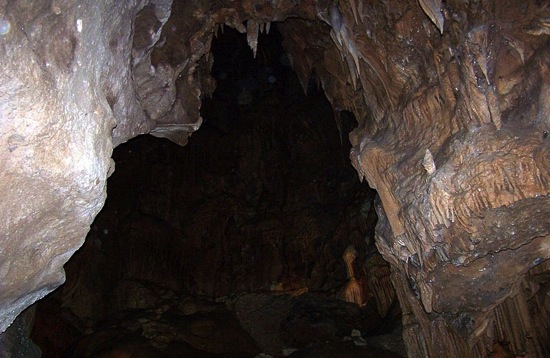
800px Lake Shasta Caverns 2The other side had a sheer drop of many feet, but an iron rail was erected to ensure a measure of safety to visiting tourists.The last of the "floors" to which we were taken was called the "Cathedral" room and it consisted of a rather flat surface with a wall of fluted limestone which greatly resembled the pipes of a giant organ.
The caverns remain just as nature made them, but certain conveniences such as paved walkway, stairs, guard rails, and indirect lighting have been added. There is no moisture condition requiring protective clothing or footwear, and the temperature is a comfortable 58 degrees F. constantly.
There were several arms of Lake Shasta, and during many months of the year it is a popular resort and marina. One can hire houseboats of various types and really enjoy a wonderful holiday here, taking the whole family along. This was indeed a delightful trip, and I took a number of photographs before we left for home.
Later that summer, in July, Emma and I decided to visit Expo '74 which was being held in Spokane, in the Pacific state of Washington, and which is just below the Canadian border.
I had the Chevelle checked over for one of the longest rides I would be taking and we motored up to some friends, Jackie and Bill Peters, who lived at Moses Lake, Washington. To make the journey easy, I decided to take two days doing it, and I chose the city of Bend in central Oregon as our overnight stop. Some of the beauty spots passed were Klamath falls and lake, and Mount Shasta. The drive was very pleasant and uneventful, and towards late afternoon we reached Bend where I found a suitable motel in which we stayed for the night. Continuing next morning, we reached the south side of the Columbia river, amidst some of the most gorgeous mountain scenery on the Oregon side. This river marks the boundary between Oregon and Washington.
Following an easterly course along the river - the highway was built along the side of it - the view was outstanding. I took the curve which carried us into Washington State near the town of Pasco, and reached Bill and Jackie's place in the afternoon. They were quite happy for us to stay there as long as we liked, and agreed to go along with us to Expo '74 in Spokane in another couple of days. Their son, Stephen was with his grandparents in Canada so there was plenty of room for us. Our company was very welcome to them too since Moses Lake was a rather lonely spot. The country around their large mobile home consisted of wide tracts of farmland on which was grown acres of wheat, alfalfa and beets. It was my privilege to see how a wheat combine
reaps, threshes, winnows and transfers the finished product into a waiting truck with a single operator in his glass-enclosed, air-conditioned cab, listening to stereo music on tapes while he worked.
Expo '74 proved to be just a glamorised country fair. We all enjoyed the American and Russian pavilions, and partook of a really special dinner at the latter place. It was well after midnight when we got home, very tired since a lot of walking was involved at the exposition grounds.
RiverfrontParkFlowers
The next day, however, we made a splendid trip to the Grand Coulee Dam, one of America's great hydro-electric power complexes situated on the Columbia River in central Washington. This great dam produces millions of kilowatts of electrical power, and has greatly benefited the farming industry in the Columbia Basin, where the land, previous to its erection, was nothing but parched though extremely fertile desert, wasting away for lack of water. I was reliably told that since the Grand Coulee Dam was built, the value of the agricultural produce in the region now exceeds a total of one hundred million dollars.
580px Grand Coulee Dam Panorama Smaller
Our party joined a conducted tour, and was shown over a lot of the works there, which included a stroll along the top of the giant spillway where the water was a great frothy churn of snow-white foam as it cascaded below. On our way back to Jackie's home we stopped at Dry Falls, which can really be described as the skeleton of one of the greatest waterfalls in geologic history. It is three and a half miles wide, with a drop of over four hundred feet. This prehistoric waterfall was forty times mightier than Niagara.
It was explained to me that millions of years ago, during the glacial period, the mighty Columbia River was diverted from its original course due to earth pressures in the ice age. As the glaciers receded at some later date carrying away softer strata of the earth's crust, Dry Falls remained, and it now bears silent witness to the tremendous forces of nature.
We returned to Moses Lake and left for Paradise in another couple of days. I varied our return trip a little by avoiding the curve of the river near the Oregon border, going over a toll-bridge instead, and continuing the delightful scenic drive to Biggs along the water's edge, where we turned south. Again I broke the journey in Bend, Oregon, spent the night there, and arrived home in Paradise late the following afternoon. The trip was a good test of my ability to stand up to nine hours of continuous high speed driving on the freeways from central Oregon to Paradise, California.
Our son Gordon, who had been living in Paradise for the last four years, now decided to move to Georgia, three thousand miles away on the Atlantic coast. He sold his property and packed his household things into a large moving van, then drove it and his family all the way across country to the new home of his choice in Wildwood, Georgia. In retrospect, I cannot help thinking that there must be a certain measure of wanderlust in our family - the removal took him about four days.
Once more Emma and I are thousands of miles away from our nearest relative, but by now, we were becoming quite used to the idea. It was, however, quite a different feeling, having just a few friends around, instead of one's own kith and kin.
Towards the latter part of 1974, I developed a herniated lumbar disc and had to be hospitalized at the Feather River Hospital for five days. I was given traction, hot pack's, and whirlpool bath treatments, and after I was discharged, I got a friend of ours to build a rig onto my bed, so that I could continue the traction treatment at home.
Winter was now fast setting in, and we discovered that northern California was far colder than the south in which we had always lived. For a couple of days we were almost snow bound, with sixteen inches of snow all around our apartment, enveloping the car, and making life quite awkward. During this snowfall, some large trees fell across power lines cutting off electric supply to Paradise, so we were without cooking facilities and light for over a day.
Arising out of this, we had to clear out our refrigerator and freezer, and store our meat, chicken, milk and all perishables in the deep snow which had piled up nearly two feet high on the outside walls of our apartment. It was quite a new experience. Fortunately, the house was heated by gas, and so was our water supply. Were we all-electric, it would certainly have been very uncomfortable for us all.
It would have been quite possible to live in this quiet town if Gordon and his family had not gone, but the older we get, the more we realized the importance of man's gregariousness, especially in respect of his own family. We therefore decided it would be in our interest to leave Paradise. After a little enquiry and search, we chose a neat little apartment in North Highlands, a suburb of Sacramento, the capital city of California. Not only did we have more friends here than in Paradise, but there was a whole lot more to interest us than we ever had in all the seven years we lived in this state.
We moved our own furniture down the hundred miles with the kind help of two friends, using the popular "U-Haul" method. Shortly after we joined the Senior Citizen's centre and club, which provided us with all the companionship, entertainment, and cheap trips around the countryside that we could absorb. We were also quite close to all major communication lines, just in case we needed to make use of them. This removal to North Highlands was in March 1975, with both Emma and myself in reasonably good health.
After settling down in our new location, places in Sacramento like Sutter's Fort, The Capitol Park and Mall, and the Senate building were all visited by us, and we were later able to explore the Bay Area Rapid Transport (BART) system which is the local and very modern counterpart of the London Underground system. We took a long ride on "BART" one day, going under the San Francisco bay from the downtown area reaching out as far as Concord on the other side of the bay where the line ends.
800px Walnut Creek BART 011
On yet another occasion we visited the Golden Gate Park, and what a delightful place this proved to be. We visited the Japanese Tea Gardens there, the De Yonge Museum and the fantastic Aquarium in the Natural Science Building. That was as much as we could absorb in one visit, so we returned another day and we were fortunate in being able to see an "Exhibition of Archaeological Finds of the Peoples Republic of China".
800px Golden Gate Park air 2
In this exhibition, three hundred and eighty-five works of art were displayed, embracing a time-span from the Palaeolithic age (about 600,000 years ago) through to the 14th century A.D. Included were prehistoric artefacts, ceramics, bronze vessels, oracle bones, stone sculpture, wood carvings and gold and silver utensils. They were fully dated and documented, and provided important and accurate comparative data.
During the summer of this year, (1975) one of the senior citizens groups to which we belonged, staged a one week outing on a Greyhound bus, involving a tour which took us from Sacramento through Yosemite Park where we stopped for lunch in the shadow of El Capitan.
Yosemite El Capitan
El Captain is a tremendous granite monolith which rises 3,000 feet above the valley floor, and it seems to salute the visitor as he approaches. It is reputed to be the largest single block of granite in the world, and much greater in volume than the Rock of Gibraltar.
Continuing through Yosemite Park on our week's tour, we came out at the eastern end and via Tioga Pass, cutting across the California Stateline into Nevada, where we stopped and spent the first night in Tonopah at a very comfortable "Western Motel" (Silver Queen). Leaving Tonopah next morning we travelled clear across Nevada into the state of Utah, the state with a very strong "Mormon" influence.  We halted for lunch at a delightful spot called Cathedral Gorge, then pushed on to Cedar City where the Greyhound bus was serviced, and then on to Bryce Canyon, climbing to almost ten thousand feet before we reached the National Park there at about sundown.
CathredralGorgeByPhilKonstantin
We were housed in little log cabins, and spent that night in this setting of high forested country withsome of the most glorious rock formations we had ever seen. All the next day we were sightseeing in this area, and we slept there yet another night.
On the following morning, we rode our chartered Greyhound along the freeway on to the North Rim of the Grand Canyon. We spent a day and a night there, and witnessed some more of nature's marvellous rock sculpture and views that simply were indescribable.
Grand Canyon colors
Grand canyon hermits rest 2010
The Grand Canyon is in the state of Arizona, and on the following morning we returned to Utah and spent our fifth night at "Zion" National Park. Here we were once again put up in log cabins. We arrived at Zion in the early afternoon, and so were able to go sight-seeing for the rest of the day.
Our sixth day was spent travelling back through Nevada state, and we arrived at Las Vegas in the early afternoon. There we put up at the "Kings Inn" and during that evening we were taken on a conducted bus tour of the famous "Las Vegas Strip", by our experienced bus driver, who provided a running commentary over the speaker system of all we passed by. At night, Las Vegas, often described as the gambling capital of the world, is a sea of thousands, no millions of brilliant lights along its famous strip, and it was truly an education to see the way of life of one segment of people.
After spending the night (our last) in this exotic city, we left the following morning for Sacramento and home, via Reno, a famous divorce centre, passing through Hawthorne, Where we were pointed out the several bunkers containing explosives for the military, and which was spread over a very wide area. We arrived home that evening just before midnight after a very educational and pleasant week spent amidst some of the grandest sights one can ever hope to see in all of the North American continent.
To provide a little "in-depth" information about the National Parks, the first one we stayed at, Bryce National Canyon Park, is located in South-eastern Utah, about thirty miles north of the Arizona border. Here, sand, wind and water have carved the plateau into several horseshoe shaped amphitheatres, cutting limestone cliffs into fantastic forms, and exposing layers of rock that glow in delicate and varied colours, ranging from pinks to reds, in several shades, under a canopy of pure blue sky.
The natural structures, ranging from man-size to hundreds of feet in height, are identified by fanciful names like "Queen Victoria", "Tower Bridge", Mormon Temple" etc.  A paved highway runs along the edge of the forested plateau, and several "overlooks" provide magnificent views to visitors. Miles of horse and pony trails depend easily from the plateau, and thread through the rock formations. The origin of these picturesque formations goes back thirteen to sixty million years. Erosion of the rim is steadily proceeding at the rate of twelve inches every fifty years.
800px Thor s Hammer Bryce Canyon
Natural bridge in Bryce Canyon
Bryce Canyon became a National Monument in 1923 and a National Park in 1928. It has an area of 56 square miles.
Looking down into the canyon, the surface seems to break off almost perpendicularly to a depth of several hundred feet. It appears as if the bottom had dropped out and left rocks standing in all shapes and forms as lone sentinels over a grotesque and picturesque scene…. There are thousands of red, white, purple and vermilion coloured rocks of all sizes resembling soldiers on the walls of castles, monks and priests in their robes, cathedrals and congregations, presenting the wildest and most wonderful scenes ever to behold.
Bryce Canyon was named after a Mormon settler, Ebenezer Bryce, who built his cabin on a tributary that drained one of the large amphitheatres, around the year 1874. He grazed cattle here for a shor time, but long enough to give a very vivid description of the place, " A hell ova place to lose a cow", and a name for the park.
Some of the most spectacular views may be seen from "Sunset Point"', "Inspiration Point", "Bryce Point", and Paria View". These vistas provide the most scenic concentration of sculptured red rocks in this area.
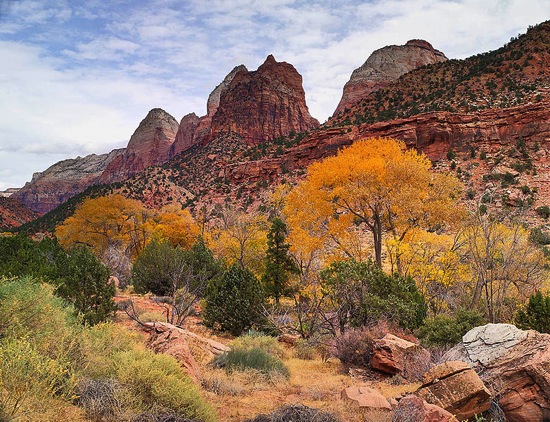
Zion Canyon National Park is located in south western Utah, and has an area of 147.000 acres. It was established as a park in 1919. Its walls are crowned with white pinnacles that shade almost imperceptibly to vermilion yellow below. Impressive heights include "The Great White Throne", (6,700 ft.) "The Beehives"", "The Sentinel" and the "Three Patriarchs". Access to Zion park is via the highway running from St. George. This park is a region of deep narrow canyons with vertical walls and massive rocky domes and pinnacles of gorgeous colours, mostly in varying tones of red. Zion canyon is nearly half a mile deep and is cut by the Virgin river which falls from 50 to 70 feet in a one mile stretch. Along the road leading to the lodge, there is a mile long Zion - Mount Carmel tunnel with open galleries which provide sweeping views of the canyon.
Zion Canyon was discovered in 1858 and the region was settled by Mormons, in 1861, who arrived from the Great Salt Lake Valley and gave it the name Zion. The great difference between "Bryce" and "Zion" is that whereas one looks down into Bryce, at Zion, you have to look way up, - heavenwards.
780px ZION ENTRANCE
Zion angels landing view
The North Rim of the Grand Canyon, however, was the most awe-inspiring and majestic of the three national parks we stayed at. Here, as at Bryce Canyon, you looked down into the views spread out before you, and here is a brief description I put together, obtained from leaflets and library research. The Grand Canyon is 277 miles long. Its width is more difficult to measure, the average distance from rim to rim is about ten miles. It is about one mile deep, 4460 feet from Bright Angel lodge on the south rim down to the river, (Colorado) and 5750 feet down from the Grand Canyon lodge (where we slept) on the North Rim.
The great pyramids of Egypt and the largest sky-scrapers of the 20th century would be equally lost within its depths.
In essence, the Grand Canyon of the Colorado is a canyon composed of many canyons. It is a composite of tens of thousands of gorges. In like manner, each wall of the Canyon is a composite structure, a wall composed of many walls, but never a repetition. Each one of these innumerable gorges is a world of beauty in itself. And all of these unite to form one Grand Canyon…. and what a sublime spectacle.... Geologists claim that the Grand Canyon began to form sometime in the last six million years.
Down in the inner gorge is the Colorado river, busily at work, doing its best to carry the mountains to the sea. It has cut the canyon to its present depth, but its work is not finished, it still has another 2400 feet to go before it is stopped at sea level. It has functioned like a giant conveyor belt, taking the weathered rock materials from as far away as the Rocky 'Mountains down to the Gulf of California. In cutting the canyon, the river has exposed the pages of geological history, and now lies, as a bookmark in time, to show us where to begin….
Going along with groups from the Senior Citizen's Center and the "Go-Goers" club, to which we belonged we made frequent trips by bus to Lake Tahoe, and areas like Donner Lake, Reno, and the Truckee river. To get there one has to go up and over the High Sierras where the air is pure and invigorating. The altitude is approximately 7,200 feet at the summit of the Sierras where the freeway winds its way over the top.
We spent our first Xmas in Sacramento very quietly, attending the Senior Citizens' Holiday dinner on December 20th, 1975, held at their spacious clubhouse at 27th and J Streets in the capital which was a great success. It was completely free. The menu consisted of Roast Turkey with all the trimmings, Baked Yam Casserole, Mashed Potatoes, Steamed Broccoli and Carrots, Fresh Fruit Salad, Tossed Green Salad, Cranberry Sauce, Rolls, Assorted Pies with Coffee, Tea, Milk or Punch according to your choice. Live music was supplied.
When Emma and I returned to California after our five months sojourn in Guyana, between us and our daughter Marsha and her family, it was decided that we should try to get that sole remaining branch of our immediate family, either into the U.S.A. or into Canada.
There was so much more of a future in these two latter countries, that as soon as it was possible, I started enquires at the San Francisco Immigration Department with respect to sponsoring them for entry into America.
It was also nice to hope that as parents now approaching the "allotted span", we would be able to have at least one segment of our far-flung family closer to us.  Gordon, our eldest child, was now in Georgia, just about 3,000 miles away, Michael, our second, lived in Barbados, about 5,000 miles in the Caribbean area, where now that he was a full blown Ph.D. in English Literature, he was a lecturer at the University of the West Indies in Bridgetown, Barbados, at Cave Hill Campus. Maureen our elder daughter, was living in Middlesex, England, with her husband Ron and their son Paul, so it was really a great idea to have Marsha and her family a little closer to us.
After several attempts, however, it proved impossible for her to enter the U.S.A. on a permanent basis, so our next hope was to try Canada. Fortunately, the Canadian effort was successful, and in short order, the Hardinge family was all set to migrate to Brandon, Manitoba. They left Guyana on February, 16th, 1976, and arranged to break their journey to Canada by stopping over in Miami, Florida for one week, thus giving Gordon and his family and Emma & me, the opportunity of a family re-union in this winter resort of the U.S.A.
Gordon and his family drove down the 800 miles from their home in Georgia, and Emma and I decided to fly over from California and meet them in Miami. It was a splendid joint affair... By taking a night flight from Sacramento to San Francisco, we arrived in Miami at about 8.00 a.m. just four hours before Marsha's plane was due from Guyana. There is a time difference of three hours between California and Miami.
We took a taxi to our motel-apartment which I had booked a couple of weeks in advance, while waiting for our apartment to be readied for us. (There was a very tight booking plan at Miami motels at this time of the year, and occupation usually commences at midday). Emma and I did some shopping for groceries. Our motel apartment was nicely situated, near enough to the down-town area, and not far from the beaches and parks. I selected it from the Florida Tour book issued by the Automobile Association, and we were very pleased with it. There was ample accommodation for six, which included Marsha's family of four. It had a well appointed kitchen complete with gas stove, refrigerator, dining table and chairs, pots, pans, dishes, glassware and cutlery. There was the usual wall to wall carpeting and ample air conditioning and heating. We planned to cook most of our meals and not have the bother of frequenting restaurants, so that our arrival a few hours before Marsha and family gave us the opportunity to purchase all the food we would need for the entire stay in Miami. The timing was just right.
After Emma and I were safely installed, and had all our things put away, we received a telephone call from Gordon who was somewhere on the highway a few miles from our motel. We gave him directions to meet us at the airport, and as the plane from Guyana was shortly due, Emma and I took a taxi and went down to meet the children and their families.
Miami International Airport is a very busy place, but after waiting a little while, Gordon and his family showed up in a camper in which they had travelled from their home in Georgia. In another half hour or so, waiting outside the Customs Immigration department, we were able to greet Marsha, Aubrey, and Richie. They looked happy but tired as it was a long journey from Guyana.
Gordon's camper had sufficient room for everybody as well as the luggage, so we just piled in and drove back to our rented apartment. While there was no vacancy for Gordon's group at our motel, he was lucky in finding accommodation at another establishment close by, so it was possible to walk over and be with each quite easily. It was so conveniently close that Arna, Gordon's wife, joined forces with us in respect of preparing meals, using the kitchen facilities where we were. This arrangement certainly simplified matters and cut down our expenses very appreciably.
It was a delightful re-union of exactly one half of our immediate family… the four cousins, who now met for the first time, thoroughly enjoyed each other, and Gordon who had not seen his sister for over twenty years, was really very happy to be with her. They took long walks together...
Living in Guyana where most imported food-stuffs were banned, the Hardinges took full advantage of such "delicacies" as apples, walnuts, cereals, cheeses and all those products they were denied in their own hometown. Between Emma and Arna, they were introduced to Vegetarian cooking, and they really enjoyed the change it provided.
We picnicked one day in Crandon park, which is on Key Biscayne, access to which is across the Rickenbacker Causeway joining it to the mainland. We had lunch in the shade of a sea-grape tree on tables specially set up for this purpose. After lunch we walked along the beach. The sun was shining brightly, and the temperature was about 78 degrees F. and there were lots of kids and people swimming and frolicking in the water. Looking beyond the water's edge, as far as the eye could see, there was nothing but an expansive Atlantic Ocean with several ships far out to sea.
We had collected for Marsha and her family, a giant size suitcase filled with things we knew they would require to start the winter in Canada. They included warm clothing and all the various requirements for a cold climate. Apart from buying some of these items, friends of ours had donated many useful articles of clothing and Gordon and Arna had also added their contribution. We included such necessities as non-skid grips for the children's shoes, and an electric blanket with dual automatic control.
An entire day was spent trying out garments for size etc., and sorting out what would be needed to arrive in when they reached Winnipeg. Items such as we procured for them were quite unobtainable in Guyana, a tropical country, and since this was still winter 1976, it was necessary to be properly clad for the Canadian temperatures, which at that time of the year could be well below freezing.
Gordon and his family left after spending just about four days with us. He had his own several commitments at Wildwood hospital where he worked, and could not stay any longer. In view of the fact that the journey to Miami took him three days on a round trip basis, he was away from his practice for just about one week. We were sorry to see him go, but were indeed grateful he was able to come and enjoy the time with us.

For the rest of that week we took it easy, allowing the Hardinge family to rest as much as possible, remembering that they had to leave in another three days for Canada - to them, a new end strange country, with all the inevitable problems of starting life afresh especially in the winter.
During the last two days we were together, we repacked the six large suitcases Aubrey and Marsha had brought with them, and having put everything in order, we confirmed their flight arrangements for Canada, and just waited for the final farewells.
We gave up the motel apartment just a little before midday on Sunday 22nd February 1976, and left in two taxis for the airport. We saw them as far as the security inspection gate, and on their way to the waiting-room for their Air Canada flight. Since that was as far as we, as non-travellers, were allowed Emma and I left in a taxi to spend a couple of days with some friends in South West Miami, - Fred and Marjorie Phillips, with whom we were very friendly ever since we were both living in Georgetown, Guyana. As a matter of fact, Emma was once employed by the firm of C.A. Phillips Ltd, of which Fred, one of the Phillips brothers, was the accountant. We spent a couple of days with them, and afterwards returned home to California flying via New Orleans. We really enjoyed these friends.
Our week with Gordon and Marsha and their families was very rewarding, and we thoroughly enjoyed it. I was certainly reminded of the time way back in 1930, when I had planned to set up life in Canada after marrying, but which did not come about.
Shortly after returning to our apartment in Watt Avenue, North Highlands, California, we telephoned Aubrey's uncle, Albert Johnson in Brandon, Manitoba. Albert had sponsored the Hardinge family and until such time as they could become organized, Aubrey, Marsha and their two children would be taken care of by him. Just by chance, Marsha was at the Johnson's home when I telephoned, so we were able to have a little chat with her. She explained that due to an hour's delay in their flight from Miami, they arrived late in Winnipeg and spent that first night there at the home of Leslie Johnson, Albert's son.
On the following morning, continued Marsha, Leslie drove them all into Brandon, their final destination in Canada.
It was arranged that they would spend the week in a motel, at the end of which time provision had been made for them to rent a two-bedroom apartment and thus be on their own. It was a very comfortable apartment, Marsha said, and conveniently situated Just one block away from the school where the two children would be attending. The ensuing week would be occupied in selecting furniture etc., and generally sorting things out. The children, she said, were very happy, and were having a "ball" playing in the snow. Aubrey too, would be starting out in another couple of days, 6th March, in the employ of "Binkleys Motors", an automotive firm in Brandon. Everything seemed to be under good control.

Retirement and trip to Guyana (1973)

Having resumed our normal life after our return from Hawaii, we enjoyed a breathing space for some months before deciding when I should finally retire from the Loma Linda University Hospital pharmacy, where I was employed since the middle of 1967. I had now attained the age of sixty-seven years, and while it was not mandatory for employees here to be retired at the customary sixty five, I felt it was proper to go in deference to the numbers of young men constantly being added to the list of those seeking employment. So I decided that September 1973 would be the final date, and I expressed this intention to the pharmacy director at Loma Linda.
In the meantime I decided to put our mobile home up for sale, take a trip to Guyana where our daughter Marsha and her family, as well as our son Michael and his family lived. Michael had been successful in obtaining his PhD degree in English Literature at Kent University in England, and had returned to Guyana as a lecturer at the University there.
Record player
We even considered the possibility of settling in Guyana if conditions proved satisfactory. With this in mind, we planned to ship sufficient household stuff like kitchen utensils, bed linen and surplus clothing, and all the household paraphernalia which would have been impossible to carry with us on a plane. We even had the turntable of our stereo (Panasonic) changed to 50 cycles so as to accommodate the electric current in the City of Georgetown.
Our mobile home was sold, fully furnished, a couple of months before I retired, but by good fortune we had a friend, a widow, in the same park where we lived who was going on a three month vacation to Duluth, Minnesota, and she was happy to have us use her mobile home during her absence. The arrangement was a very good one, since I paid the expenses involved in ground rent and utilities on her place for the period we used it, saving her this outlay, while at the same time, for just the nominal cost of these expenses, we enjoyed the use of her fully furnished home. I even painted some of the outside of her mobile home, and carpeted her front stairs with indoor-outdoor carpet. Our friends mobile home was also very conveniently situated just across the way from the pool, and since I liked swimming so much, this was very handy.
In order to ship the things we proposed sending to Guyana, I purchased six large metal barrels, and after careful packing I had them picked up by a trucking firm in Los Angeles, and taken clear across to Texas, where they were put on board a ship that sailed for Guyana.
After the Farewell ceremony at my workplace, we had many of our close friends at a reception and dinner at the recreation room of the Reche Canyon Mobile Park. It was indeed a very enjoyable evening.
A few days later we packed our large suitcases and other travelling impedimenta, and motored up to North Highlands spending a couple of days with some friends before going on to Gordon in Paradise.
The journey from Colton to North Highlands took nine hours, and it was a delightful ride through the Mojave Desert to Bakersfield, continuing by freeway past Sacramento to our friends home, which was located in a suburb of this capital city.
When we left North Highlands a few days later, it took two hours driving to reach Paradise and Gordon and his family. We stayed about three weeks in Paradise, and from there we booked our passages to Georgetown, Guyana, via New York. We planned to leave our car with Gordon, much as we would have liked to take it with us. We thought it might be possible to sell it for us after we had left.
During our stay in Paradise, friends of Gordon and Arna, the Scarborough’s, who owned a little cabin cruiser, took us for a ride on Lake Oroville, one of the great man-made waterways in California. We travelled quite some distance up the lake, and had a picnic supper at the foot of a waterfall somewhere along its course.
lake oroville in butte county
Feather falls plumas national forest
Soon, however, the time arrived for us to say goodbye to the American branch of our family, and Gordon motored us down to the Sacramento airport to catch our plane.
Sacramento International Airport
From Sacramento we flew to San Francisco where we joined our trans-continental flight to Kennedy airport. We got there without any incident towards late afternoon, and took the local transport to the Grand Central Station where our good friends Marie & Yulisse were waiting for us. From there we hired a taxi cab and arrived at their home on Rosedale Avenue in the Bronx.
Only about four days did we spend in New York and while there, guided by Reggie Stoby, I had the stereo set air-freighted to Georgetown. We had to travel on the Long Island subway while attending to this business, and it took the entire day to complete.
In spite of quite a bit of excess weight, we managed to get by without having to pay too exorbitant a charge, and once again, we were winging our way to the country of our birth.  It was getting dark when we arrived at the airport in Guyana, now called "Timheri". Its name was "Atkinson Field" when I last saw it nearly fourteen years ago. There was a fair amount of people waiting at the terminal to be processed by immigration and customs, but when it came to our turn, there were no problems.
Marsha and her family were waiting for us, and Aubrey drove us home in their car. Before we left California, Marsha had secured a house for us to live in at a rental of approximately two hundred dollars a month, and she took us straight to it, since the trip had left us quite tired. The house was furnished - in a sort of way - and it was just one block away from the pharmacy building I once owned and operated, - "Gilkes Bourda Pharmacy" - at the corner of Regent & Light streets.
The surrounding area was quite familiar to me even after the long absence. Many of the people who lived close by remembered us both quite well, but there was one very noticeable change in the faces of those we had known before, - they looked so much more worn.
Marsha and Aubrey and their son, Ritchie were constantly at our place and we certainly enjoyed having them. Michael lived a little way out of central Georgetown, in a newly built up district known as Lamaha Gardens, and it was not so easy to get to them unless we had a car. Shortly after our arrival we did acquire a "Morris Minor", one of the Nuffield's economy cars. It was a bit awkward at first for me, having to drive "Stickshift", since, for the entire time I was in the U.S.A. the cars I drove had Automatic transmission.
The first impression I got of Georgetown after my long absence was one of great activity. The streets were busier, the traffic greatly increased, and the people were apparently always on the move. As we got around a bit, it was obvious that there was a terrific upsurge in housing construction, as witness the various schemes at Ruimveldt Lodge, along the east coast of Demerara, and in the area behind the Bel Air Housing scheme, which included Bel Air Gardens and Lamaha Gardens. The architecture too, was in keeping with modern trends. In almost every case the former "bottom house" being fully built in, so as to provide greater accommodation.
Pegasus Hotel in Georgetown Guyana
On the east coast of Demerara there was a new University of Guyana. At the top end of High Street, on the edge of the Atlantic ocean was a modern hotel-in-the-round - the "Pegasus". Then in the very heart of the downtown area was the imposing Bank of Guyana building, with a pretty and restful roof garden looking down upon an avenue of shade-filled trees along the Main Street side.
Bank of Guyana
New blocks of flats had sprung up in various parts of the city, all of which were new to me, and it certainly indicated great progress in this direction. Much of the waterfront in the downtown district of Water Street, however, depressed me, as since the numerous fires which razed the greater part of the business heart of the city, many of the firms which were affected had only rebuilt on a temporary basis. Quite a few spots were still empty.
Emma and I renewed many old friendships, and everyone was glad we had returned to the old country.
Before I left California for Guyana, my daughter Marsha had written to say that Lynn Bostwick the proprietor of Evans Pharmacy, had heard of my impending return, and was willing to acquire my services as a pharmacist in his establishment. So after settling down a bit, I decided to call on him and see exactly what the situation was.
When I last saw Bostwick in 1959, his was a small pharmacy, and he was an upcoming young member of the profession. Now, however, his was one of the most comprehensive businesses of its kind in the country, and he carried very extensive stocks in a new building he had erected.
There were, by virtue of my now being an American citizen, limitations on the amount of work I could do, and the money I could earn, while living outside the U.S.A. So it was arranged that I would give just a little part-time service in the pharmacy, and not prejudice the benefits to which I was entitled from overseas.
In my brief stay at Evan's Pharmacy, it was amazing how many people I met whom I had previously known and who remembered me from the days when I operated my own business so many years ago in the city of Georgetown. Among the people who visited the shop during my tenure of office there, was Johnny Adamson, my old boss, who, when I was only eighteen years old, and he was manager of Booker's Drug Stores, gave me my first job, and under whom I served for many years, qualifying as a pharmacist myself, and promoted by him from the smallest branch of the firm to its largest one; then finally ending my career with this large organization, when I purchased their Bourda branch in 1953. He and I enjoyed a little chat together.
I visited many of my former colleagues, going to the homes of quite a few; Henry Cromwell and Curtis Gharles were among those who had already retired from active work. One of the outstanding changes in the rural area was the construction of the McKenzie highway linking Georgetown with the Bauxite City. This road was very well built, and compared favourably with good American roads. I did not travel the whole length of it, but what I did drive on was enough to convince me that it was a first class job.
Another big undertaking which was in course of construction was the rebuilding of the city's sea defences. A new wall and esplanade, stretching from the Fort Groyne eastwards along the northern boundary of the city was in active progress. Because of the low-lying nature of the Atlantic coastline, high tides frequently inundate parts of Georgetown, and much of the east coast of Demerara. The existing wall which kept the sea out was being threatened by the breakers at spring tides, hence the need for this new set of sea defences. It looked like a mammoth job, and the old "Sea Wall", as I remembered it, was now closed to the public, so as to carry on with the work of reconstruction. Heaps of material like sand and stone were piled at various places along the roadway and there was a lot of activity there.
A public swimming pool - the Luckoo pool - was new to me. It was built along the ocean front near to the Kingston end, and I made frequent use of it. Imported food was in short supply in the entire country, as the policy of the government was to make Guyana self-sufficient in this respect. Indeed, the potential for achieving this was certainly there, but accustomed as the population was to depending on imports to satisfy its old established habits, the public was not too happy in accepting the local substitutes in place of the imported equivalents. I will concede that techniques of "know-how", finishing, and proper presentation of local products could stand a lot of improvement, but inevitably, and in time, I feel sure that the country has the possibilities to be almost, if not completely self-supporting.
Chickens on a Guyanese roadside
Many years before I left Guyana, I used to envisage chicken farming on a grand scale. On more than one occasion, I personally raised my own chickens. I visualized the time when it may be possible to offer chickens for sale at a price that would seriously compete with beef, pork etc., and I was truly glad to see that the chicken industry was now an accomplished success, several large and prospering enterprises taking care of all the egg and chicken requirements of the whole community.

After three months of life back in the land of our birth, unfortunately, we began to miss the U.S.A. and to really notice the difference in standards of living between California and Georgetown.
There was, in our Charlotte Street home, the constant battle against rats, cockroaches, ants, flies and mosquitoes. At times we even had incursions of marabuntas, a type of wasp.
It is always so much easier to step up one's living standards than reduce them, and the longer we spent in Georgetown, the more we realized how difficult it would be to re-adjust completely to living there. And that is just where we started to think that a permanent return to our old home town was out of the question.
At the end of five months, we booked our passages back to California. Our friends were very sorry to see us go, and Marsha and Michael and their families were quite unhappy too at the prospect of our return to the U.S.A.
In the evening of one's life, however, it is easy to understand why a choice of conditions embracing peace of mind would be preferred to any other decision, and now, in our late sixties, Emma and I once more made another change in our life style which, only time will tell, and posterity decide, whether it was the right or the wrong thing to do.
We emplaned on a British Airways craft at Timheri airport in a ninety degrees Fahrenheit temperature, but since it was late February, we realized we would be arriving in New York in the heart of winter, so we dressed in rather warm clothing.

A Visit to Hawaii (1973)

The year 1973 was a big year for me. In it I visited the state of Hawaii, resigned my job at Loma Linda hospital, and re-visited Guyana, where I was born. We were encouraged by some good friends of ours, Denny and Jeanette Watts, who lived in the same mobile home estate in Reche Canyon, to join them on a two week vacation to the Hawaiian islands. Denny was a staunch advocate of the Hawaii life, and he and his charming wife had made the trip on many occasions.

Needless to say, Emma and I were both not only agreeable, but quite excited at the prospect of a holiday in these lush Polynesian islands, seeing for ourselves and enjoying such world-renowned places as Waikiki Beach, Pearl Harbour, Diamond Head, and Honolulu. Added to this was the fact that with such seasoned guides as Denny and Jeanette, we were assured of receiving the full treatment on our tour.

With the acquisition of some colourful shirts, shorts, and Muumuus, we therefore set out for Hawaii. We emplaned at Ontario airport which was only 25 minutes from home, changed planes at Los Angeles, and in four hours we had crossed the Pacific to arrive at Honolulu airport at about 3.50 pm. Hawaiian time.

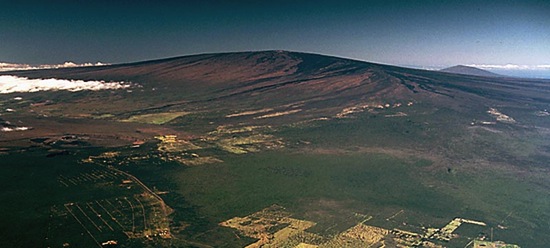
As we approached the first sight of land, Denny was able to point out the volcanic peak of Mauna Loa, an active volcano on the island of Hawaii.

Mauna Loa Volcano

Perhaps I should here point out that Hawaii, the fiftieth state of the U.S.A., comprises several islands, the largest of which is Hawaii, sometimes referred to as the 'big' island, and which has active volcanic eruption from time to time.

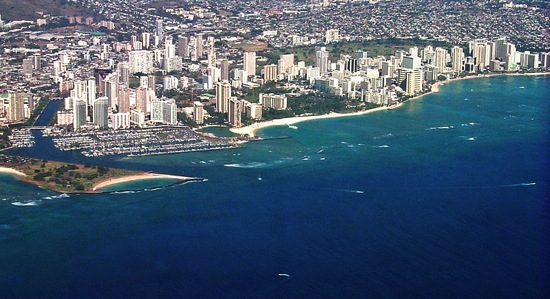
The most important of the group of islands, however, is Oahu, capital city of which is Honolulu. Pearl Harbour, the large American Naval base is located here, as is the world famous Waikiki beach, and its array of magnificent hotels built on the beach with Diamond Head in the distance.

WaikikiAerial

800px Waikiki Beach Waikiki Strand

We had booked rooms at the Royal Hawaiian Hotel in Honolulu, popularly known as the "Pink" palace. The rooms were beautifully appointed, and the picture windows overlooked the lawn in front, with delightful and exotic plants and flowers along the borders all around Kalakua avenue and all its imposing buildings, fringed with coconut palms lay just about two hundred yards beyond. The other side of the hotel faced Waikiki beach, access to which was gained by a special elevator which carried hotel guests from their respective floors straight down to the level of the beach.

800px Royal hawaiian from beach

The king-size bed was the largest I had ever slept in, and the bath and toilet facilities in our private suite were superb. There was a colour television set in our room in addition to a radio, as well as a refrigerator and all the comforts of an orderly home. The rooms were all fully carpeted with thick pile, and the view from the window was just great. With a temperature of 76 degrees, F. it was very pleasant, and even the water on the beach was extremely comfortable to swim in. I swam every day, sometimes twice. By virtue of being a newspaperman, our friend Denny and his wife were given V.I.P. treatment, this was also extended to us, his friends. We had adjoining rooms to theirs, and the whole setting was fine.

We spent the first day getting the feel of the place, looking around the area, gambolling on the beach and learning the geography of Oahu. We never ate at our hotel, but would go and sample various eating places. One great favourite of ours was the open terrace of the "Surfrider" hotel quite close to ours. It overlooked Waikiki beach, and as we enjoyed our meals, we could see the bathers, the surf riders, and the various crafts all close by the terrace where we ate.

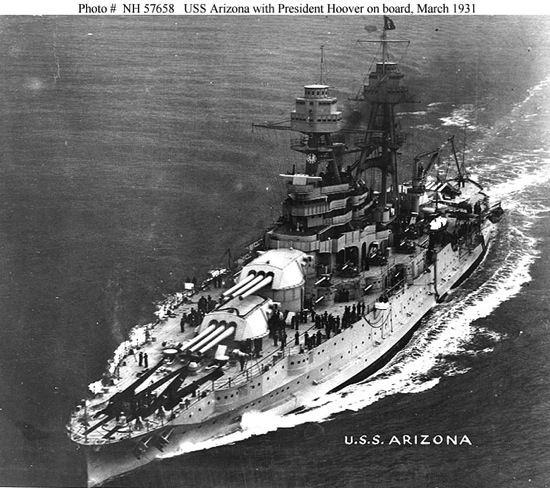
Our ten days in Oahu were occupied in visiting the Polynesian Cultural Center for a whole day, touring Pearl Harbour and doing the cruise to the Arizona Memorial another day, yet on another day spending our time going through Hickam Air Force base - Denny was a retired Navy man - we devoted yet another day to looking through the Ala Moana shopping mall and visiting the multi-shopping quarter known as Kings' Alley.

We rented a small car and drove to the north side of the island stopping along the way which was very scenic, to take pictures of such sights as "Chinaman's Hat" (a small islet off the coast shaped like a perfect Chinese Hat) Rabbit island, and the Blowhole, where the breakers are forced through a sort of tunnel and ejected as a tall spray through an opening in the rocks. We reached the sight of the Polynesian Cultural Center and spent the rest of the day and a part of that night there.

800px Polynesian Cultural Center entrance

This Center is organized by the Mormons and is made up of separate little villages of Tahitians, Maoris, Tongans, Hawaiians, Fijians and Samoans. In each community is given a demonstration of the life and customs of its people, and a display of their arts and crafts. To all intents and purposes, what one sees is a visit, in miniature, of these Polynesian islands, and it is very educational indeed.

It takes a couple of hours properly to tour the six areas, and when that is over, there is a large open-air setting in which the music and singing of the several groups are individually demonstrated. This is really fascinating, and the colourful costumes of the performers create a very beautiful effect in the strong but very pleasing sunshine, a gentle breeze making the temperature just ideal.

This was followed by an exhibition of canoe-craft, dancing on the canoes, and singing, performed on a man-made waterway with a little island built into the center of it. The island was used as a stage from which the entire show was explained and controlled, and from which, in between events, the cast would entertain the audience with singing, dancing and instrumental music.

Each of the six Polynesian groups, one at a time, would come sailing in from around one side of the island stage on canoes of various designs, very ornate, some of them being double canoes and others outriggers, singing and dancing in their brightly coloured costumes, and in their native languages.

Polynesian Cultural Centre Fiji Temple

It was a wonderful sight and the setting was magnificent. The man-made waterway was palm-fringed, and the overhanging semi-tropical foliage was of various hues, all bathed in brilliant sunshine, with moving shadowy effects on the surface of the water.

I was fortunate in being able to secure a position on a footbridge about thirty yards off, giving me a head-on view of the whole display. I secured dozens of colour slides of the event, which gives me the opportunity to re-live the whole experience from time to time.

Polynesian Cultural Center Rower

The next big event at the Cultural Center was a Polynesian meal, served in a thatched building open at the sides. The meal was different, but tasty. We enjoyed the Papayas, and the "Mahi-mahi", (dolphin meat, deliciously done) but did not care much for the "poi" a type of grated tuber, quite milky, which to us, had a most insipid taste.

Later in the afternoon we were taken over to the Mormon Temple and grounds - what a beautiful building, and what extensive and well kept lawns - the sun was just going down and I was able to capture a fine picture of the site, showing the great fountains in the foreground, with the temple and setting sun in the background.

We were shown a movie of the Mormon activity in South America, and afterwards driven back to climax our day at the Polynesian Cultural Center.  The "piece de resistance" was a brilliant show put on by native artistes and lasting well over two hours.

The setting was superb, and I will try to describe it as best I could.

The stage was set on what, in the darkness of the evening, looked like an island, (man-made no doubt) with a surround of water over which were causeways leading to the rest of the area around. The viewing stand was arranged across the water in a palm-fringed setting, very pretty indeed. The background of the island stage was a volcanic mountain range, and it was so constructed and cleverly wired that very realistic " eruptions" could be produced at will, complete with the rumble of deafening proportions, and followed by billowing smoke and life-like molten lava.
The opening scene depicted such an eruption, and this was repeated whenever it would serve to compliment a performance.

Each Polynesian group did its own 'thing'. There were songs, stories, fire-eaters, fire dancers, sword dances etc., but the Tahitians, as dancers, were quite outstanding in their skirts. The entire performance was done in native setting and with costumes of the respective groups. At times the roar of the artificial volcano, and the clouds of smoke and falling lava were awe-inspiring, but the show was a new experience and a great success.

We were delighted with the days outing and reached home very late that night. The trip to Pearl Harbour and the Arizona Memorial was another fine days enjoyment. We had a conducted tour of the harbour, and all the points of interest were explained to us. We were shown where the Japs came over the cliffs, and how they hoped by this surprise attack, to cripple the U.S. Navy in that area. Pearl Harbour is really the nerve centre of the U.S. Pacific Command. It has deep water facilities in its ten square miles or so of navigable water for hundreds of anchorages, and is almost completely landlocked.

Ford Island aerial photo RIMPAC 1986 JPEG

One of the many ships destroyed in this sneak attack on December 7th, 1941, was the U.S.S. Arizona.

H57658

The Japanese airmen scored a direct hit on the ammunition storage room, causing the ship to, as it were, help destroy itself.

USS Arizona 2

Over one thousand bodies were encased in the twisted metal as the ship exploded and sank, and up to this day, and even as we looked down upon the spot, we could see little globules of oil rising to the surface of the water where the battleship still lies. At times, I was told, it is possible to detect rotted particles of clothing rising from the bowels of the sunken ship even after a lapse of more than three decades since the ship and its crew went down. On several occasions expert divers were sent down to attempt to retrieve the dead bodies from the Arizona, but due to the hopeless tangle of metal below decks, this was impossible. In trying to dive up the bodies, I was informed, several divers lost their lives, so the idea was finally abandoned and a lasting memorial of white concrete and steel was built spanning the hull. The only part of the "Arizona" that is visible now is ventilator shaft which projects a couple of feet above the surface of Pearl Harbour. The Memorial was dedicated as a public and national shrine in 1962. Before I left this site, I leaned heavily over the side of the Memorial and reached into the ventilator shaft, wrenching a tiny strand of copper wire from it, and which I now keep among my prized souvenirs of the various places I visited.

Uss arizona

Before leaving Pearl Harbour, we visited Hickam Air Force Base nearby, had lunch there, and generally looked around.

On yet another day, we roamed through the Ala Moana Shopping Center, a two-tiered shopping plaza of very modern design. An escalator runs from one level to another, and on the top level there is a delightful promenade with modern sculpture, exotic fish ponds containing multi-coloured carp in crystal clear water. There are shops on both sides of the decorated promenade, and they are indeed just miniatures of the best shops one can find on the mainland of the U.S.A. I did not count the number of these shops, but was reliably told that they exceeded three hundred. Certainly smaller in size, individually, but clearly the largest collection of shops I had seen so far. It was possible to purchase almost anything there.

We visited Kings Alley, another multi-shopping complex, which was much closer to our hotel. Here one sees a continuous ceremony of the "changing of the guard", somewhat after the pattern of the British version at Buckingham Palace. While taking pictures of this ceremony, I noticed that the Hawaiian flag flying from the flagstaff there, contained a small Union Jack in its upper corner. Questioning Denny about this, I was reminded that Captain Cook, an Englishman, discovered Hawaii, and in deference to this, recognition is still shown in the flag's composition. The shopping centre of King's Alley is built somewhat like a maze, and it is easy to be "turned around" going from one shop to another. Each one seems to run into another as they are built in terraces, and some have flowering little enclosures. The whole setting is quaint, though small, but with all, delightful. One particular shop specialized in tracing genealogical histories.

Next on our list of day excursions was the International Market Place in Kalakua Avenue, not far from our Pink Palace. You step off the sidewalk and you are in it. A sort of semi-tropical arrangement of unusual shops, the most unusual one being Trader Vic's Restaurant built in a Banyan tree. One has to see this place to believe it. I took a night-time flash picture of its patrons climbing the short stairways to this tree restaurant, complete with menu postings at its entrance, and its hostesses receiving guests.

3305 jumbo

Even though built in a tree, it was solidly constructed to accommodate a number of people. In this marketplace I had a caricature of myself drawn by an artist in three minutes flat, and it bore a striking resemblance to me, rolling a large pill - after enquiring what my profession was. 

Caricature of Alfred Gilkes

After eight or nine days in Oahu with Denny and his wife, I decided that Emma and I should go over to Hawaii, the big island, before returning to the mainland, U.S.A. We accordingly booked a flight from Honolulu, and arranged for a car to be placed at our disposal on arriving there. also made reservations for hotel accommodation at the Kona Hilton hotel for the first night, and at the Naniloa in Hilo, on the other side of the island, for the second evening. As we reached Kona airport, our rented car, an Impala, was waiting for us, and I drove to the Hilton, which was not too far along the coastal road.

Hilton hotels are usually good, but this one, built on the edge of the Pacific ocean, was superb. It was several floors high, and each floor was bordered on all its sides with rows of flower boxes in which were colourful and exotic tropical blooms of many glorious shades. The floors were arranged in a sort of pyramid, tapering towards the top, and with the flowering surround, it was a truly delightful sight. The grounds were absolutely fantastic, and the entire landscape was a dream. That evening we drove out to a Polynesian restaurant, and enjoyed a splendid meal.

Our hotel room overlooked the wide expanse of the Pacific, and just by chance, the swimming pool of the hotel, of a very novel shape, was directly below our balcony, six floors down. That night we slept peacefully, lulled by the gentle ocean breakers on the nearby beach.

We had breakfast in the hotel, and having packed our hired car, we took off towards Hilo, going around the northern part of the island. We passed many volcanic areas, and stopped to collect some samples of stone. Towards midday, we reached the Naniloa hotel and had lunch there. It was a delicious New York steak but was it pricey! This was quite a good hotel too, but coming from the Hilton, there was a big difference.

After resting a little after the long ride, we drove around a bit just sight-seeing. The famous Rainbow Falls was on our list of things to see, and we were told not to miss it. After a short ride we climbed into a somewhat higher region and were able to locate it without too much trouble. It was the classic type waterfall, tumbling over the edge of hilly terrain into a gorge below, and producing the inevitable erosion in the rocky formation at the base.

Rainbow Falls Hawaii

In an earlier part of these memoirs, I gave a description of Kaieteur Falls on the Potaro River in Guyana, and in truth and in fact, Hawaii's Rainbow Falls pales into insignificance when compared to the giant, still almost hidden in the interior of the South American jungle of Guyana.

The best eating place we discovered was another Polynesian restaurant just next to our hotel in Hilo, and for the entire stay in this town, we used the services of this fine establishment. The meals were reasonably priced, and good and most of the time the place was packed to capacity.

On the following day we toured the southern and south western part of the island, visiting the world-renowned Black Sand Beach and volcanic areas around. As we drove past certain parts we could see volcanic steam coming through cracks in the rocks and stopping the car for a more careful examination, we put our hands to the steam jets which proved to be very hot indeed. That entire afternoon was spent in the beautiful Lilliu Kalani park and gardens, named after a Hawaiian queen, and here I took dozens of slide pictures. This park was just gorgeous, made up from huge lava deposits, artificial ponds, bridges made of volcanic stone, and an overall landscaping that simply beggars description. We stayed here all afternoon and well into the evening, enjoying the cool breezes from the waterfront fringed with waving palms, lolling on the immaculate lawns and enjoying the many Japanese and Polynesian sculptures and designs that liberally dotted the grounds. Banyan trees abound in this area, symmetrically arranged along the sides of the streets. It was really a very pleasant two days on the "Big Island".

We turned in our hired car and took the night plane back to Honolulu, stopping en route at Maui. At Honolulu we took a Western Airlines flight to San Francisco, arriving there in the early morning, and then transferring to another plane which returned us to Ontario.

Denny and Jeanette who did not accompany us to the "Big Island" of Hawaii had got home a day earlier, and Denny collected us at the airport and returned us to our home in Colton.